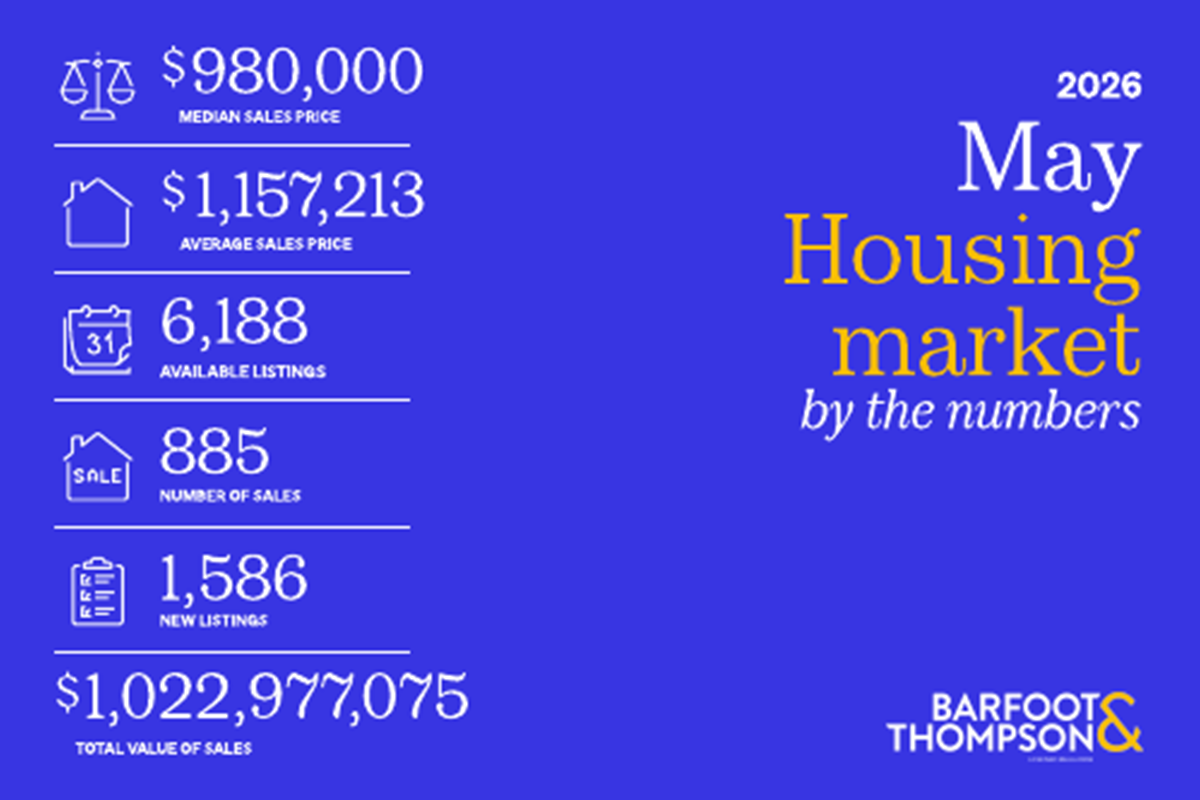
May Sales Lift Gives Auckland Property a Firmer Winter Reading is today's property story for The Auckland Loop because it gives Aucklanders something specific and current to work with. Barfoot & Thompson reported on 3 June that Auckland's housing market saw stronger buyer activity in May 2026 after April's caution. The local property story is not a boom claim; it is that May gave Auckland a firmer read after a cautious April.
The confirmed detail matters. The agency put the May 2026 median price at $980,000. It reported 885 sales for May. Those points set useful boundaries around the story: this is not a rumour, a social-media reaction, or a recycled national headline loosely attached to Auckland. It is a local item with dates, places, institutions and practical consequences.
Property readers need to separate one month's lift from a longer trend. Sales volumes, average prices, median prices and buyer confidence do not always move in the same direction, and winter can change open-home behaviour quickly. Auckland readers are usually best served when a story explains what has changed, what is still pending, and what can be checked before people make plans. That is especially true in winter, when transport, events, household budgets and public works all compete for attention.
The same update said the average price reached $1,157,213. Managing Director Peter Thompson said buyers had returned to the market in strength after being cautious in April. The wider point is that the headline is only the start. A daily local site should turn the available source material into a clear reading of what is happening without pretending to know more than the source material supports.
For readers, the practical takeaway is direct. Buyers and vendors should use the May numbers as a market signal, then compare them with suburb-level evidence and current listing conditions before making decisions. If the item affects a trip, check the route and timing. If it affects a public event, confirm the venue, cost and weather. If it affects property, business or infrastructure, watch delivery and numbers rather than relying on slogans.
The figures are Barfoot & Thompson's own market update and should be treated as one major agency's reading, not a complete measure of every Auckland sale. That discipline matters because Auckland stories often sit across several categories at once. A transport change can affect sport crowds. A weather window can affect events and hospitality. A property market update can affect household confidence, construction plans and council priorities.
There is also a clear editorial limit. The available reporting supports the facts in this article, but it does not justify inventing public reaction, adding unsupported claims, or quoting people who were not quoted on the record. The safest local coverage is specific, useful and restrained.