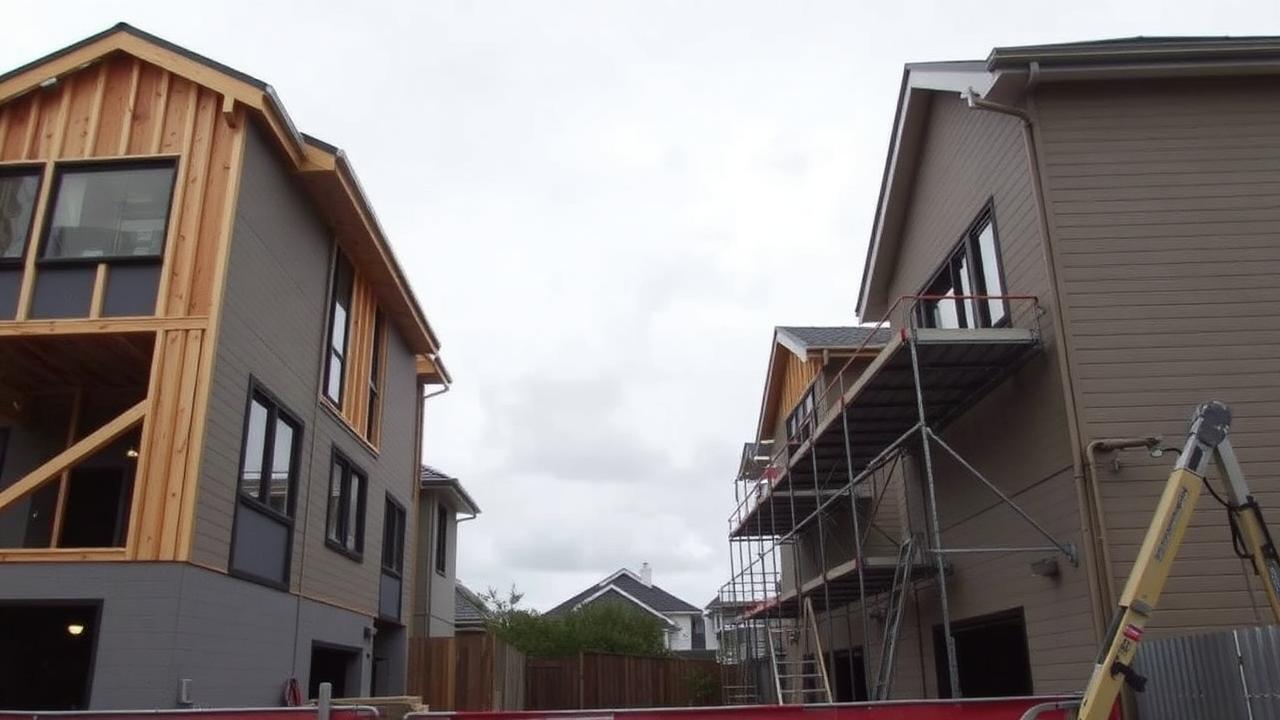

Property news is often told through house prices, listings and mortgage rates, but Auckland's property problem also sits on the delivery side: who builds, how they build, what rules they face and whether the industry has enough confidence to keep improving. That is why the NZ Certified Builders Conference and Expo, held in Auckland across 5 and 6 June, matters beyond the people wearing conference lanyards.
The official programme described a two-day event for building professionals, with learning and technical sessions, member panels, deep dives, an expo and continuing professional development through Licensed Building Practitioner points. Day two included an MBIE and specialist panel on compliance, code and regulation. Those are not glamorous words, but they sit at the centre of Auckland's housing and construction reality.
Buyers and renters usually experience property through price. Builders experience it through materials, labour, consent pathways, design changes, site risk, cash flow and the gap between what a client wants and what the code requires. If those parts do not work, supply slows, costs rise and quality suffers. A city cannot talk seriously about housing affordability without also talking about the firms that have to deliver new homes, renovations, commercial fit-outs and infrastructure-adjacent work.
The conference also included a Behind the Build tour with an Auckland Airport Eastern Terminal Integration Project stop and a visit to Cabjaks in Pakuranga. The airport project details point to the complexity of working in live operational environments, including baggage systems, airside access, terminal expansion and power centre replacement. That is property and construction at the sharp end: building while a city keeps moving.
The market backdrop is softer than it was during the boom years. NZ Adviser, citing REINZ data, reported that Auckland sales volumes were down 14.8 percent annually in April, with the city's House Price Index down 2.8 percent over the year and median days to sell sitting at 43. For builders, a slower sales market can mean cautious clients, delayed projects and tighter margins. For buyers, it can mean more choice, but not necessarily cheaper or easier construction.
That is why a technical conference can be locally important. It is where smaller firms, specialist suppliers and industry leaders compare notes on risk before those risks reach homeowners. Compliance, code and regulation may sound like paperwork, but they affect whether a reclad is done properly, whether a bathroom renovation is consented correctly, whether a new build performs in winter and whether a project survives a dispute.
Auckland needs price relief, but it also needs quality. Cheaper building achieved by cutting corners is not relief; it is deferred cost. A healthy property market would have realistic prices, enough work for competent builders, clear rules, faster processes and homes that are cheaper to run over time.
The Auckland angle from this weekend is therefore practical. The industry is still meeting, training and trying to improve through a soft market. That does not make the property cycle easy. It does suggest the next phase of Auckland housing will be shaped as much by delivery discipline as by auction-room sentiment.