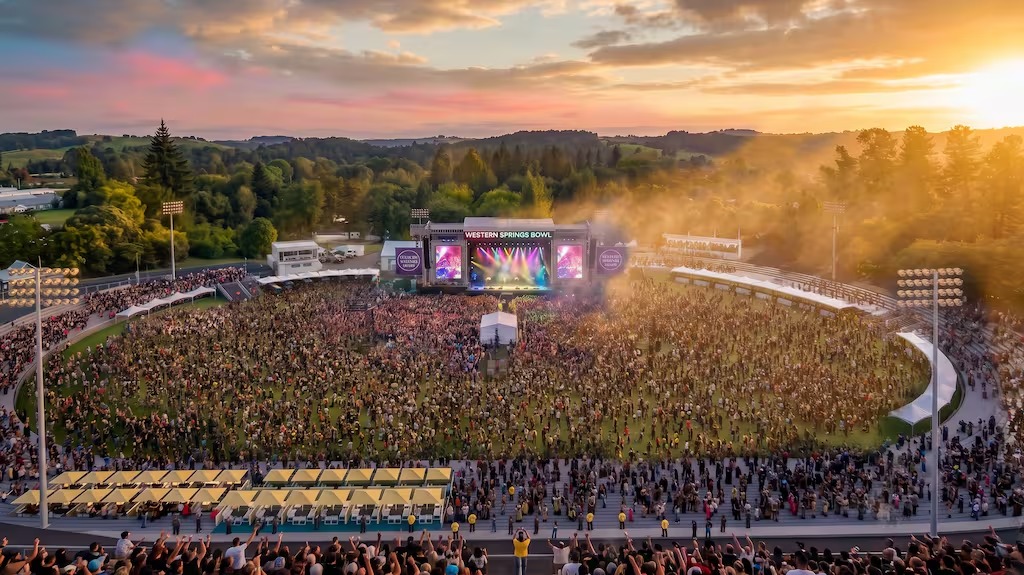
Western Springs Stadium is being repositioned as Te Wai Orea Western Springs Bowl, with a $2.5 million transformation aimed at turning the historic Auckland venue into a dedicated outdoor concert bowl over summer and a boutique sports ground outside the concert season. The update landed on 29 July and gives Auckland another example of a long-running civic argument moving from consultation and concept drawings into physical venue change.
The proposal has been around for months, with Auckland Council endorsing the bowl concept earlier in 2026. The latest coverage says work is now under way, with four months of build activity ahead. The practical plan is to focus on semi-permanent concert infrastructure and event-led revenue rather than a much larger stadium rebuild. Auckland Unlimited's earlier material said the refined concept reduced ratepayer funding compared with more expansive options, while retaining Ponsonby Rugby Club's presence and the venue's event role.
For many Aucklanders, Western Springs is not a blank site. It carries speedway history, major concert memories, sports use, local-neighbour pressure and years of argument about noise, money and access. That makes the rebrand sensitive. Calling it a bowl is not just a name change; it signals that the venue's main public identity is shifting toward music and festivals. Supporters will see a clearer role for one of the city's natural amphitheatres. Critics will ask whether the speedway legacy has been properly respected and whether nearby residents will accept another concert-focused chapter.
The venue logic is easy to understand. Auckland needs outdoor spaces that can host large summer music events without improvising every season. A semi-permanent concert setup should make production more predictable and may help attract promoters. A boutique sports role outside the main event season keeps the ground from becoming a single-use asset. The difficulty is balancing these uses without creating a venue that is expensive to maintain and politically contentious to operate.
The lifestyle angle is broader than entertainment listings. Venues shape how a city spends its evenings. If Western Springs Bowl works, Auckland gains a clearer summer concert identity near the central isthmus, with links to transport, hospitality and nearby parks. If it struggles, the city will be left arguing again about whether public money has chased a compromise that satisfies nobody. The $2.5 million figure is modest compared with new-stadium projects, but it is still public-facing money in a city under rates pressure.
The next four months will show whether the concept can become a usable venue rather than a contested diagram. Aucklanders should watch three things: whether construction stays on schedule, which promoters commit to the first concert season, and how Auckland Unlimited handles residents, sports users and heritage concerns. Western Springs has always been more than a field. The Bowl plan now has to prove it can turn that history into a workable future.
That balance will be judged publicly because Western Springs is familiar to generations of Aucklanders. People who never attend the first new concert may still have a view on the use of the site, the loss of speedway, and whether the new name respects the place. The project therefore needs communication as much as construction.