Auckland Council has put the city's everyday art collection back in front of residents with a new 28 July update that turns a large civic inventory into a practical question: how much of Auckland's public creativity is visible without buying a ticket? The council says its public art collection includes 386 outdoor sculptures, murals and large-scale installations, with 99 percent currently on display. A separate indoor collection adds 1,213 paintings, photographs and sculptures in libraries, community hubs, visitor centres, heritage buildings, local board offices and other council buildings, with 62 percent of those works currently on display.
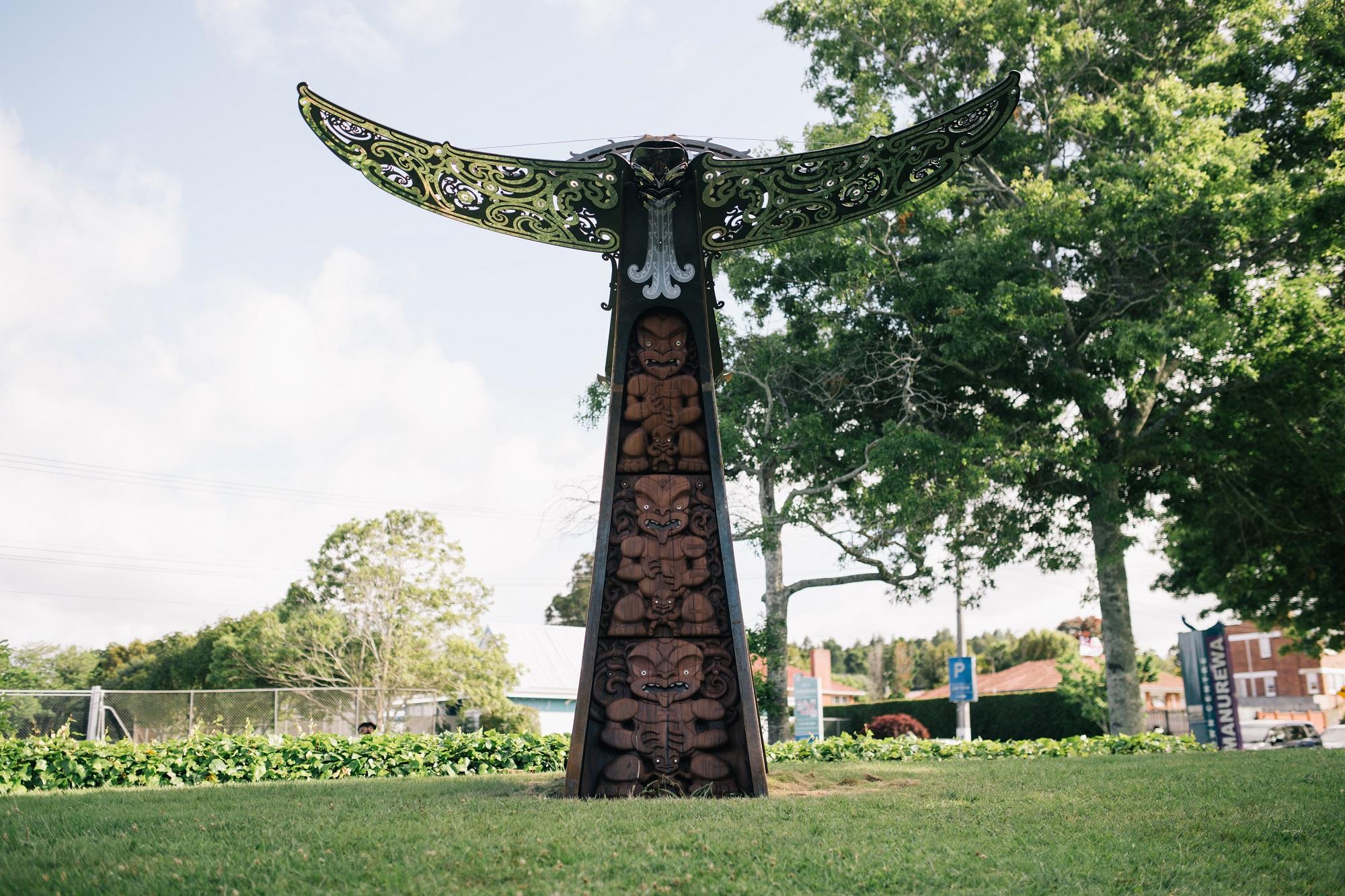
The creator-focused centre of the update is Jadyn Flavell's Te Manu Ka Rewa outside Manurewa Library. The artwork is not being treated as a decorative footnote. Auckland Public Art describes it as a sculpture in corten steel, stainless steel, polycarbonate, kauri, paua shell and LED lights, with hand-carved central figures and a bird form that connects Manurewa's name, local narratives and a message about collective effort. For South Auckland readers, that makes the work a local landmark as well as part of a regionwide collection.
Auckland Council head of Arts and Culture Emily Trent says the collection is visible in parks, landmarks, streetscapes and infrastructure, while many indoor works are available in ordinary public buildings. That is the important civic point. Public art policy can sound abstract, but the practical test is whether residents encounter work in places they actually use: a wharf, a library, a town centre path, a civic building or a local park. On that measure, the council is arguing that the collection is part of daily Auckland rather than a closed institutional archive.
The council also used the update to explain why some indoor works are in storage. A small number may be off display because they need conservation treatment, because building projects are under way, or because the display environment or priorities have changed. Trent says storage is not a sign that a work lacks value, and that formal care through time off display can be part of responsible stewardship. That detail matters because public collections carry long-term obligations. They are not only bought or commissioned; they must be maintained, insured, assessed, moved and sometimes restored.
The update says artwork removals are rare and go through a formal process approved by the council's Community Committee, with decisions guided by public value, condition, risk, legal obligations, cultural considerations and the council's ability to care for the work. Proposed gifts are now assessed against policy objectives, significance, site suitability, condition, maintenance, lifecycle costs, ownership and governance requirements. For Aucklanders, the message is that the art collection is active, but not casual. It has to welcome new work while avoiding unmanaged future costs.
The bigger lifestyle takeaway is that the city already has a large public art network that many people pass without naming. Te Manu Ka Rewa gives that network a clear local example: a named Auckland creator, a visible Manurewa site, and an artwork built to carry community meaning in a public place. If the council wants residents to support continued investment, the strongest argument will be exactly that kind of visibility.