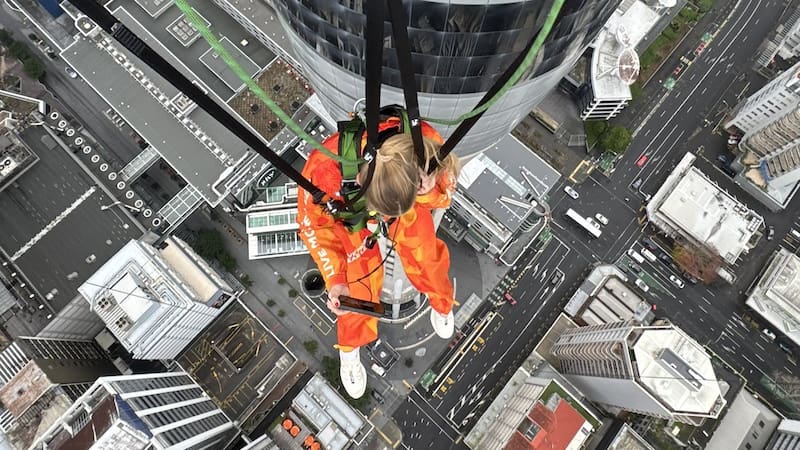
SkyCity and AJ Hackett Bungy New Zealand have launched SkyRide at Auckland's Sky Tower, adding a new 192-metre lift-and-descent experience to the city's best-known visitor landmark. 1News reported the ride opened today and described it as the world's highest lift-and-descent ride, taking riders up the outside of the tower before bringing them back down at speed.
The attraction is designed to sit beside the existing SkyJump and SkyWalk products. That matters for Auckland because the Sky Tower is already one of the few central-city tourism assets that is immediately recognisable to domestic and international visitors. Adding another high-profile experience gives the CBD a fresh reason to pull people into Federal Street at a time when central-city hospitality and retail still rely heavily on event, visitor and office-worker traffic.
SkyRide is not a passive observation-deck add-on. 1News says riders are lifted 192 metres up the outside of the tower before descending rapidly back toward ground level. Travel Weekly Asia reported ahead of the launch that the descent could reach speeds of up to 100km/h, while Qantas Travel Insider framed the new ride as part of a broader Sky Tower adventure line-up alongside SkyWalk and SkyJump.
For tourism operators, the commercial logic is clear. Auckland competes with Queenstown and Rotorua for adventure-travel attention, but it often has to work harder to make visitors see the central city as an experience destination rather than a gateway. A vertical thrill ride on the skyline gives Auckland a simple visual hook: the city itself becomes part of the attraction.
The AJ Hackett connection is also important. The brand is closely tied to New Zealand's adventure-tourism identity, and its Auckland operations already include the Sky Tower and Harbour Bridge experiences. A new Sky Tower product keeps that history visible in the country's largest city rather than leaving the strongest adventure-tourism association in the South Island.
There is also a practical city-centre benefit. Attractions that operate through the day can support nearby cafes, restaurants, hotels and transport services without depending on a single night-time event. Visitors who come for a booked SkyRide session may stay for lunch, a hotel night, a show, the casino, the waterfront or another central-city stop. That kind of bundled movement is exactly what Auckland needs if it wants the CBD to feel more active across weekdays and winter months.
Safety and weather will still shape the user experience. Existing Sky Tower adventure activities are exposed to wind and require strict operating controls, and the new ride will be judged not only on thrill value but on reliability, communication and queue management. Visitors can accept a weather delay if it is explained well. They are less forgiving when bookings, refunds or timing are unclear.
The launch is therefore more than a novelty clip. It is a live test of Auckland's ability to refresh an established landmark, turn skyline recognition into visitor spending and give locals a new reason to look at a familiar building differently. If SkyRide can operate safely, consistently and with enough visitor demand, it gives the central city another marketable experience just as winter tourism needs reasons to move.