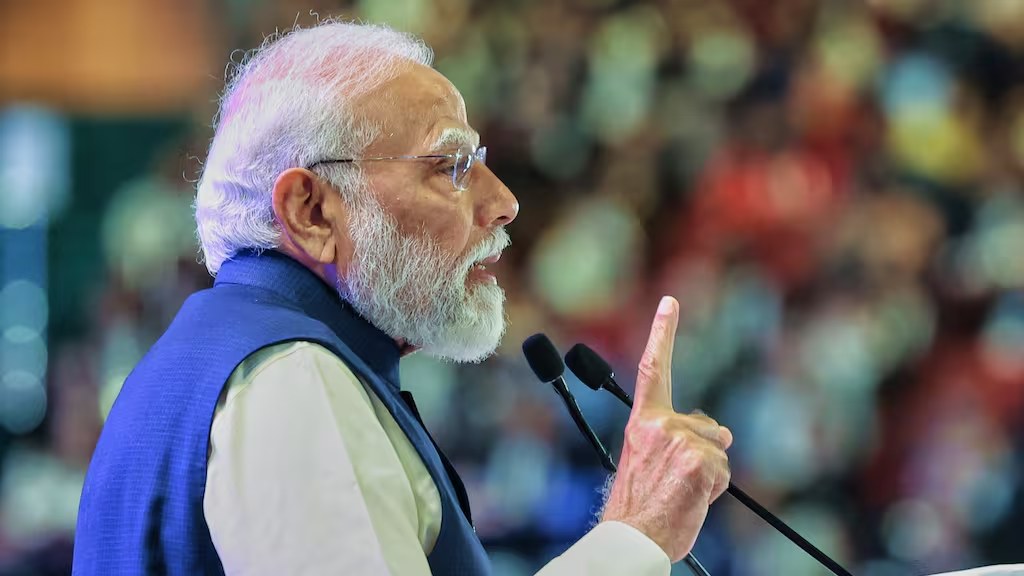
Indian Prime Minister Narendra Modi will arrive in Auckland on Friday 10 July and depart on Saturday 11 July, giving the city a short but symbolically large diplomatic visit one week after the date was confirmed by the New Zealand Government.
The Beehive announcement says the trip will be Modi's first official visit to New Zealand and the first visit by an Indian prime minister to New Zealand in 40 years. 1News also reported the Auckland dates and said the visit follows the signing of the New Zealand-India free trade agreement, which is expected to reduce or eliminate tariffs on most New Zealand exports to India once fully implemented.
Auckland is not just a venue in this story. It is the obvious stage for people-to-people ties between the two countries. Luxon has pointed to the size and contribution of the Kiwi-Indian community, which he said makes up around 6 percent of New Zealand's population and is strongly represented in business, technology, health, science and other sectors. Much of that community life is visible across Auckland, from South and East Auckland suburbs to business networks, temples, sports clubs, restaurants, universities and professional services.
The visit also matters for travel and tourism. A one-night official visit will not transform visitor flows by itself, but it gives the relationship a high-profile moment at a time when New Zealand wants to deepen India links beyond traditional education and migration pathways. Tourism, aviation, sport, education and technology are all expected to sit in the conversation. For Auckland Airport, hotels, hospitality and event venues, stronger India ties are not abstract diplomacy. They can affect future delegations, business travel, student movement, family visits and holiday demand.
Trade will be the harder test. New Zealand has chased a better India trade relationship for years, but the market is complex and politically sensitive. Dairy access, services, migration settings, education and regulatory barriers have all shaped the debate. The free trade agreement gives the visit a stronger economic frame, but Auckland businesses will watch for practical detail: which sectors get momentum, how fast tariff changes flow through, and whether small exporters see opportunity rather than only large firms.
There is also a security dimension. The leaders are expected to discuss maritime security, technology and global issues. That reflects the wider Indo-Pacific setting, where India is a major democratic power, China remains central to regional strategy, and New Zealand is trying to balance trade, security and independent foreign policy.
For local readers, the immediate significance is simpler. A major world leader is coming to Auckland for a brief official visit. That can mean road closures, security planning, community interest, diplomatic events and a burst of attention on the Indian community's role in New Zealand.
The safest expectation is that the visit will be highly managed and short. The larger question is what remains after Modi leaves. If the Auckland stop helps turn the free trade agreement, education links, tourism prospects and diaspora ties into practical follow-through, it will be more than a ceremonial visit. It will be a marker that Auckland has become a central meeting point in one of New Zealand's most important emerging relationships.