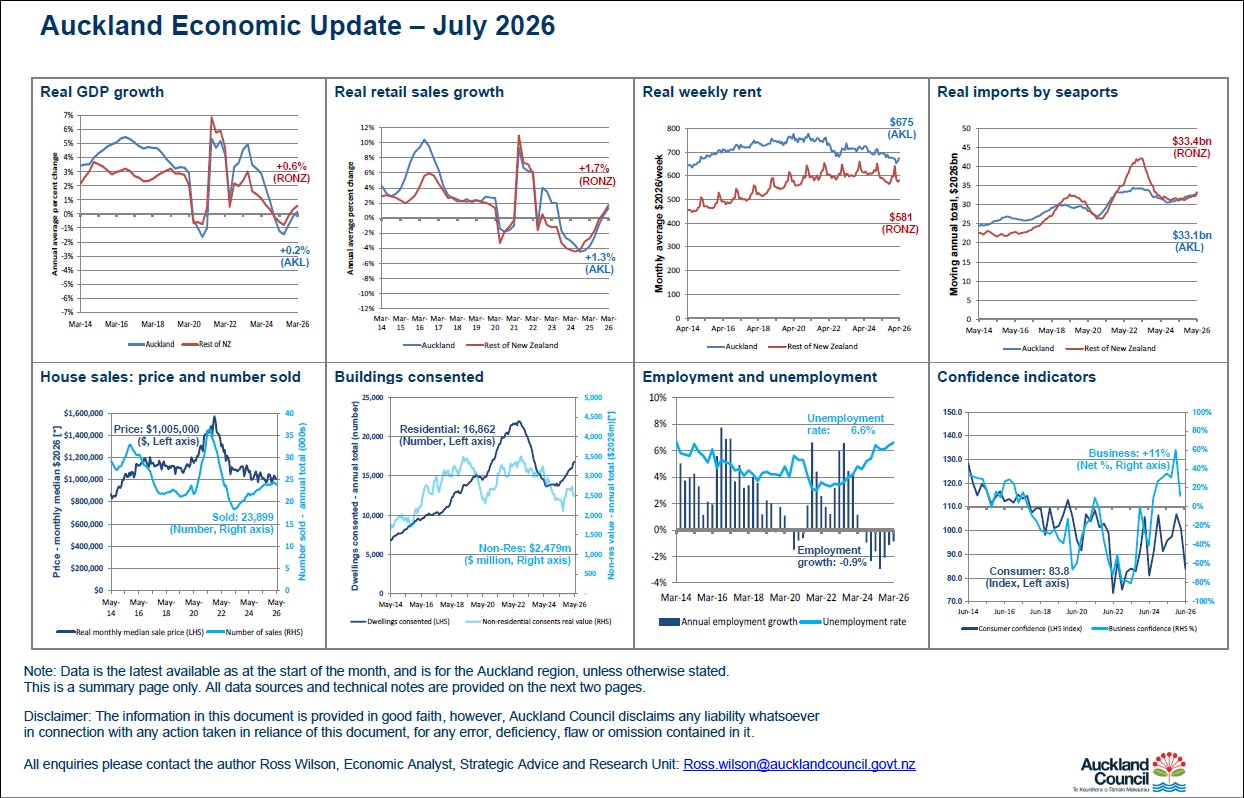
Auckland's latest official housing data gives property watchers another measured update rather than a dramatic market headline. Knowledge Auckland's July 2026 monthly housing update, published on 29 July, says 1,567 dwellings were consented in May 2026. Across the year ending May, 16,862 dwellings were consented in the Auckland region. The figures are useful because they look at the construction pipeline, not only sale prices or auction-room sentiment.
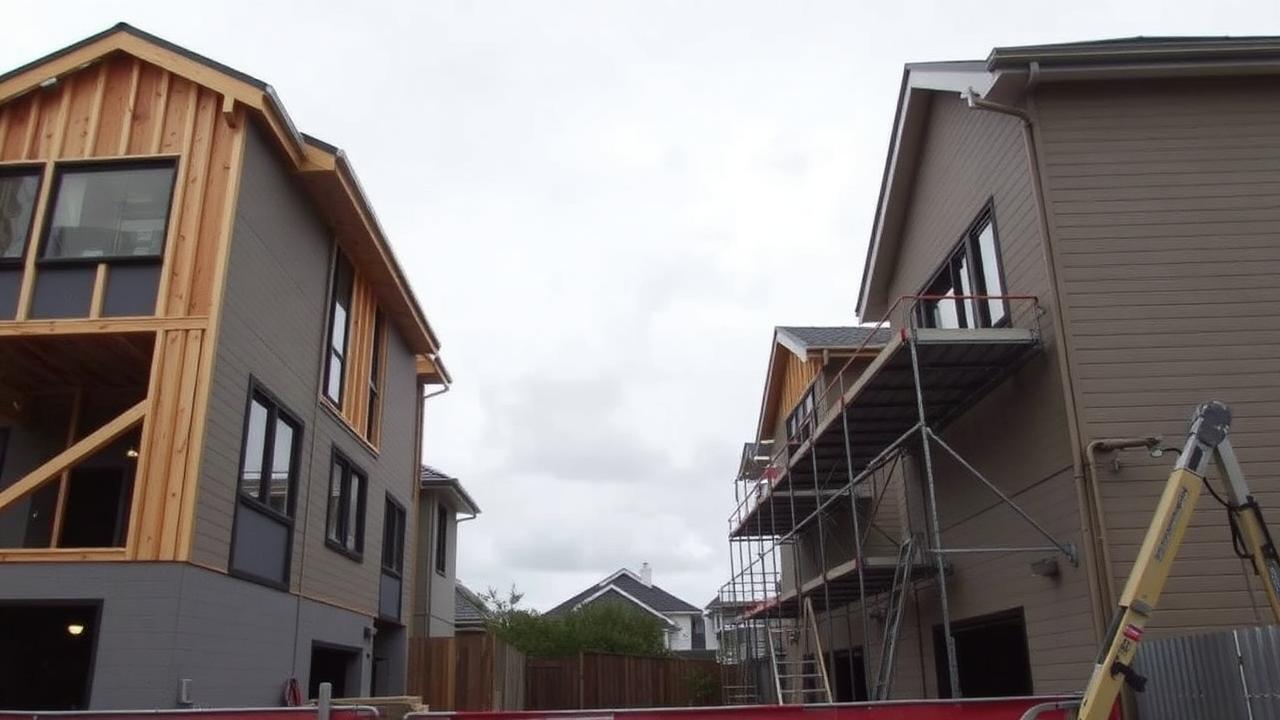
The update says 41 percent of new dwellings consented in May were houses, while 59 percent were townhouses, flats, units, retirement village units or other attached dwelling types, excluding apartments. That split continues the story of Auckland's changing housing form. Standalone houses still matter, but attached housing is doing much of the work in consented supply. For buyers, renters and local boards, that shift affects street design, parking pressure, school rolls, infrastructure demand and the kinds of homes available in established suburbs.
Knowledge Auckland also reports that 42 dwellings were consented on land owned by Kāinga Ora or Tāmaki Regeneration Company in May. That is only one part of the housing system, but it is worth tracking because public and regeneration land can influence supply in areas where private development alone may not deliver the mix of homes residents need. The number also shows why single-month data should be read carefully. One month can be affected by project timing, consent batches and the size of particular developments.
The July update sits beside other Auckland Council research and economic updates that show housing is no longer only a question of how many homes can be built. Infrastructure, hazard exposure, code compliance certificates, public housing numbers, and dwellings in hazard zones all shape the practical housing picture. A consent is an important leading indicator, but it is not the same as a completed, occupied home. The gap between approval and delivery is where financing, labour, materials, infrastructure connections and market confidence become decisive.
For the property category, the May consent number gives a better signal than a single sales anecdote. It suggests development activity is continuing, but in a market where builders and buyers are still reading interest rates, construction costs and planning rules closely. Attached dwellings remaining the majority of May consents also points to ongoing intensification in parts of Auckland, even as debates over zoning, flooding constraints and neighbourhood capacity continue.
Readers should treat the monthly update as a dashboard, not a verdict. The most useful comparisons will come over several months: whether consent volumes lift or soften, whether attached housing keeps its share, whether apartment activity changes, and whether code compliance certificates confirm projects are moving through to completion.
The July release does not settle Auckland's housing argument. It does, however, give residents, developers and policymakers a current baseline. In May, the region consented 1,567 dwellings and was still relying heavily on attached housing to carry new supply.
The next signal to watch is whether those approvals turn into completed homes at a pace residents can feel. Consents show intent and permission. Code compliance certificates, occupancy, rents, prices and infrastructure delivery show whether that permission is becoming usable housing.