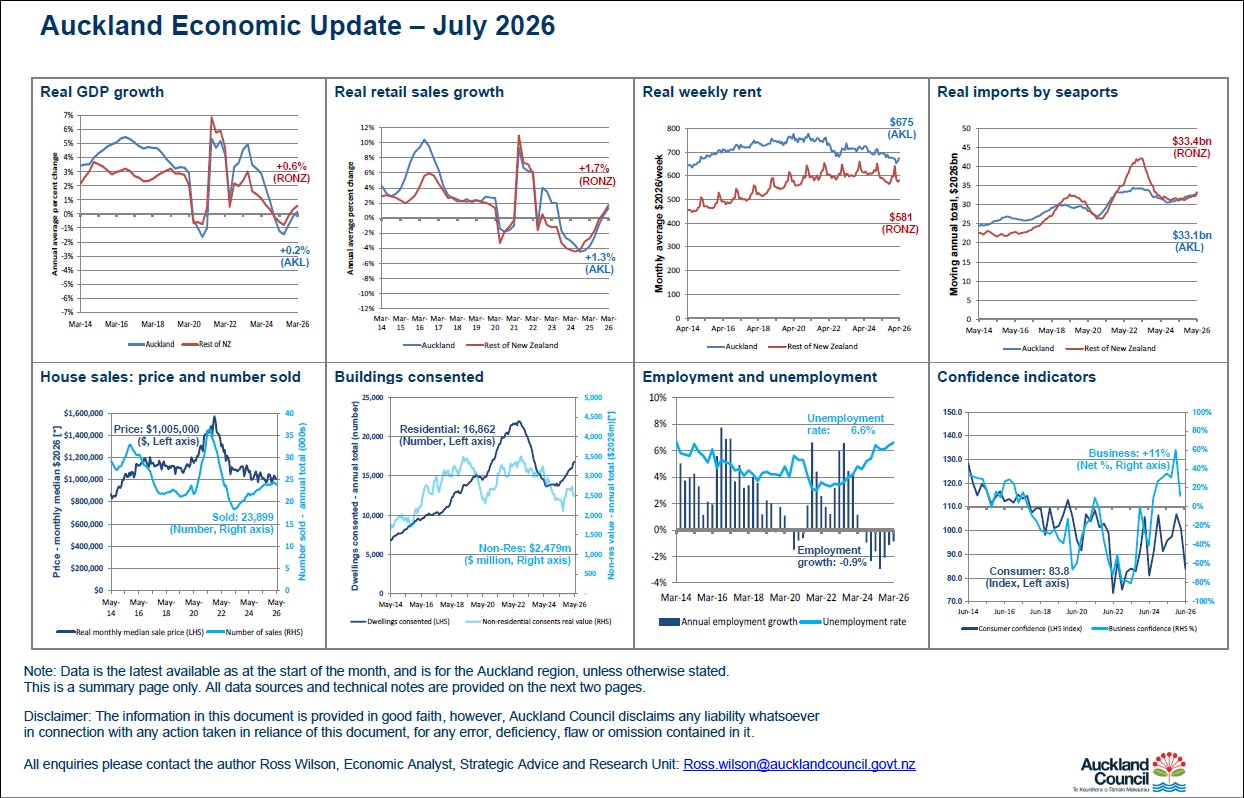
Auckland's July property picture is not a boom story, but it is not a collapse story either. Knowledge Auckland's July 2026 economic update says the median house price for May 2026 was $1,005,000 in real dollars, one percent below the previous month, the same as a year earlier, and 36 percent below the 2021 peak. For buyers, sellers and renters trying to read the winter market, the report points to a flat, pressured and still expensive city rather than a dramatic monthly shift.
The same update says 23,899 houses were sold in the year ended May 2026, a one percent fall in a month, flat since June 2025, but 30 percent above the May 2023 trough. That is an important distinction. A market can be well below its peak and still be more active than its lowest recent point. Auckland's housing market appears to be moving in that middle space, where neither side gets a simple story. Sellers cannot assume 2021 conditions, and buyers cannot assume a deep freeze.
Renters get a similarly mixed signal. Knowledge Auckland lists average weekly rent for April 2026 at $675 in real dollars, with a small uptick since February after trending down since mid-2024, and roughly the same real level as eleven years earlier. The report also notes that the rest of New Zealand sat at $581, falling since 2024 and two percent below a year earlier. Auckland remains more expensive than the rest of the country, even when inflation-adjusted rent trends look softer than recent memory suggests.
The building-consent figure is the forward-looking part of the property story. Knowledge Auckland says 16,862 new dwellings were consented in the year ended May 2026, one percent above April and up 22 percent in a year. That is still 23 percent below the September 2022 peak, but it sits 11 percent above the 2019 pre-Covid trough. The number tells readers that the pipeline has improved from weaker conditions, even though it has not returned to the extraordinary highs of the previous cycle.
For homeowners, the $1,005,000 median may feel very different depending on when they bought. People who entered near the peak may still be carrying a paper loss or reduced equity. People who bought much earlier may see the same number as proof that Auckland remains structurally expensive. For first-home buyers, flat prices can help only if incomes, deposits, interest rates and lending criteria line up. A stable median does not automatically make a city affordable.
For renters, the report's inflation-adjusted language matters. Saying rent is the same in real terms as eleven years ago can sound reassuring, but households pay nominal dollars from current wages and current budgets. The lived experience depends on income, family size, transport costs, power bills and whether people can find suitable housing near work or school. The $675 figure is therefore useful, but it should be read as one indicator rather than a complete affordability verdict.
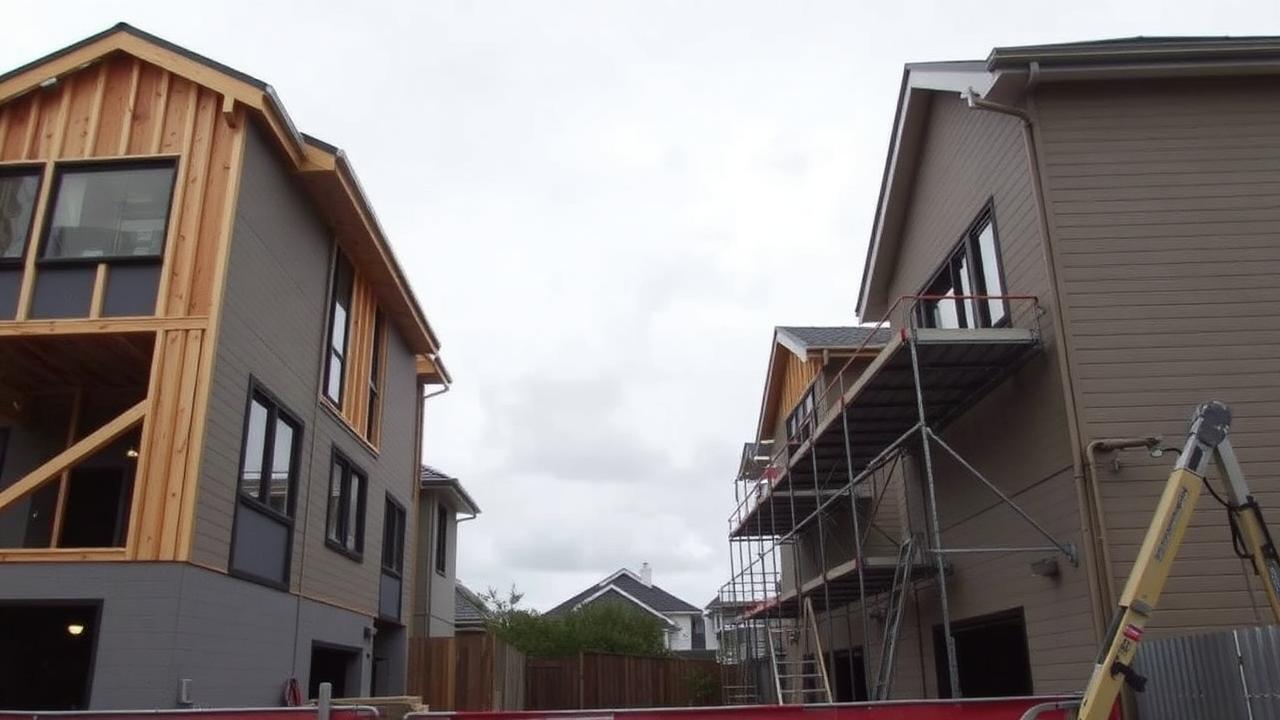
For builders and developers, rising consents are cautiously positive. A 22 percent annual lift suggests more future supply than the weaker period provided, but the market still has to absorb construction costs, financing conditions, infrastructure constraints and buyer demand. Consent is not the same as completion. Some projects change, pause or take years to reach residents. Still, the direction is relevant because Auckland needs housing supply over a long horizon, not just price relief in a single month.
The strongest takeaway from the July update is balance. Auckland property is expensive, softer than its peak, more active than its trough, and showing improved dwelling consent numbers. That mix is less dramatic than a boom-or-bust headline, but it is more useful for readers. The city's housing market is grinding through adjustment rather than giving one clear signal, and that is exactly why the July indicators deserve a straightforward property article.