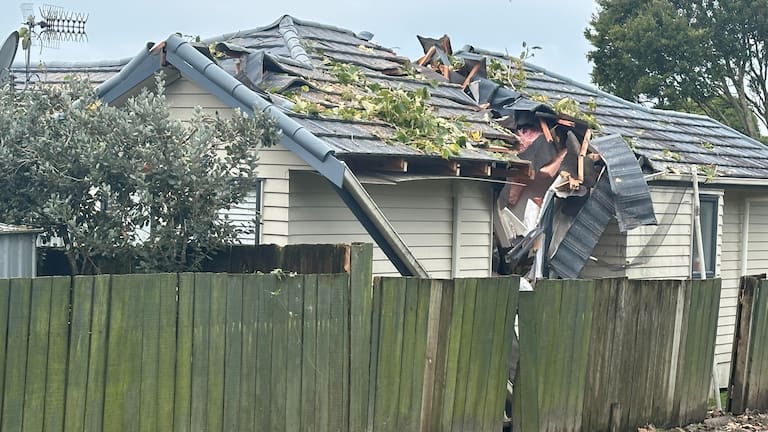
Auckland Council arborists were assessing a damaged Ranui property today after a tree from a reserve crashed onto a neighbouring home on Pooks Road, caving in part of the roof while people were inside. The 1News report says Fire and Emergency New Zealand was called at about 5.10pm on Thursday evening and sent a Henderson crew to the west Auckland address.
The most important detail is that the occupants were reported safe. That does not make the incident minor. Images from the scene show a badly damaged roof, exposed framing, roofing material and insulation where the tree struck the house. For the residents, this is now a housing, insurance and safety problem as much as a weather event.
Auckland Council urban forest arboriculture and ecology manager David Stejskal told 1News the council understood people were inside the house at the time and was relieved they were safe. He also said the council was reaching out to the occupants to offer support. That response matters because the tree reportedly came from a reserve, which puts the follow-up into the public maintenance and risk-management space rather than a simple private-property dispute.
The timing fits a wider unsettled weather pattern across the upper North Island. Auckland had already been watching strong winds, with transport agencies warning that gusts could affect exposed infrastructure such as the Harbour Bridge. A single falling tree does not prove a city-wide tree-safety failure, but it is a sharp reminder that winter wind can turn local reserves, berms and mature trees into practical hazards for homes beside them.
The next steps are likely to be slow and technical. Contractors have to assess whether the tree can be removed safely, whether heavy machinery is needed and whether the structure underneath can withstand the work. Removing a tree from a damaged roof is not the same as clearing a branch from a road. Weight, balance, broken timber and weather exposure all have to be managed before repairs can begin.
For west Auckland residents, the incident is also a prompt to report visibly unstable public trees early. Councils cannot eliminate all risk from mature urban trees, especially in windy weather, but visible cracking, sudden lean, uplifted roots, hanging limbs and damaged trunks are the kinds of signs that should be reported through official channels. The same applies after heavy rain, when saturated ground can make root systems less stable.
There is a bigger city question here too. Auckland depends on tree cover for shade, biodiversity, stormwater absorption and neighbourhood character. The answer to incidents like this cannot simply be to remove mature trees whenever someone is worried. It has to be better inspection, faster response to credible concerns, clear records and practical communication with residents living beside public reserves.
The Ranui home damage is therefore both a local emergency and a wider winter maintenance story. The residents escaped injury, which is the relief at the centre of the report. The work now is to make the home safe, remove the tree without causing further harm and understand whether anything visible could have been acted on before the crash.