Auckland drivers have a fresh overnight travel notice to check before next week's late trips, after NZ Transport Agency Waka Kotahi published its Auckland overnight motorway closures bulletin for Sunday 2 August to Friday 7 August. The bulletin was issued at 11.54am on 31 July and covers motorway improvement work across the region. NZTA says work delayed by bad weather will be completed at the next available date before Friday 7 August.
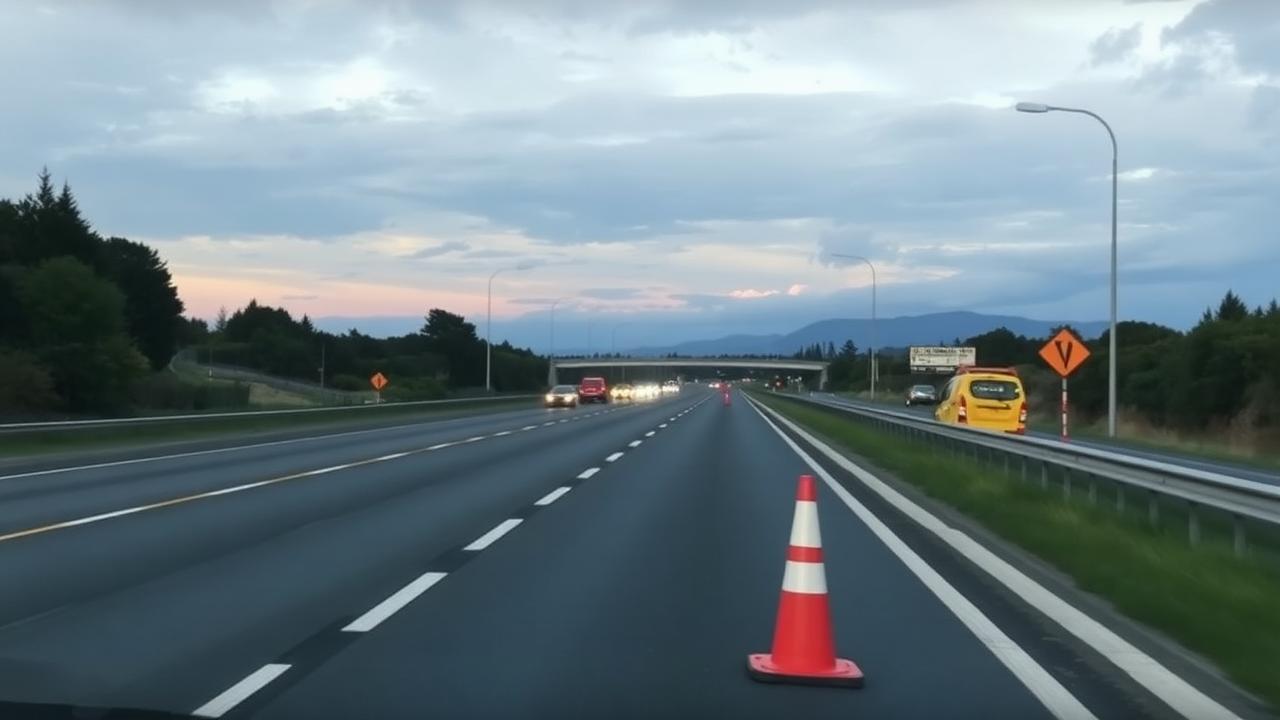
The key practical detail is timing. Unless a specific closure says otherwise, NZTA says closures start at 9pm and finish at 5am, with traffic management potentially in place before the advertised mainline closure times. That matters for airport travel, freight runs, late hospitality shifts, hospital workers, event crews and families returning across the city after evening activities. A motorway closure that is easy to work around with notice can become a long detour if it is discovered at the ramp.
The bulletin is part of NZTA's weekly rhythm for Auckland, not a one-off emergency notice. That is why the agency points motorists back to the Journey Planner for current overnight closure information. The published list is useful for planning, but the live journey tool remains the better check close to departure because weather, safety issues and earlier delays can change the final traffic-management picture.
For readers, the most important advice is not to memorise every closure. It is to build a habit around checking official tools before late motorway trips. Auckland's network is dense enough that a closure on one corridor can push pressure onto another, especially when drivers are trying to cross the harbour, reach the airport, move around the western ring route, or connect between State Highway 1, State Highway 16, State Highway 18 and State Highway 20.
The wider context is that winter maintenance is often invisible until it interrupts a trip. Overnight windows allow crews to complete resurfacing, barrier, drainage, bridge, lighting, line-marking and other improvement work when traffic volumes are lower. The trade-off is that the people who do travel at night can face more uncertainty than the daytime commuter. That includes businesses that rely on night logistics and workers whose shifts do not fit the nine-to-five assumption.
NZTA's wording also includes a reminder to follow signposted detours. That is not just a formal line. Detours are selected to manage safety, road capacity and work-zone access. When drivers improvise through small local streets, the disruption can move into residential areas that were not designed for sudden through-traffic.
The 2 to 7 August bulletin should therefore be treated as a practical weekly travel note for Auckland. Anyone planning essential night driving should check the official Journey Planner before leaving, allow extra time, and expect closure details to shift if weather interrupts crews.
It is also a reminder that Auckland transport planning is not only about peak-hour commuting. The city depends on overnight movement for supermarkets, trades, airline passengers, shift workers and emergency access. Those trips deserve current information too, especially when a normal ten-minute motorway link can become a much longer surface-road detour after 9pm.