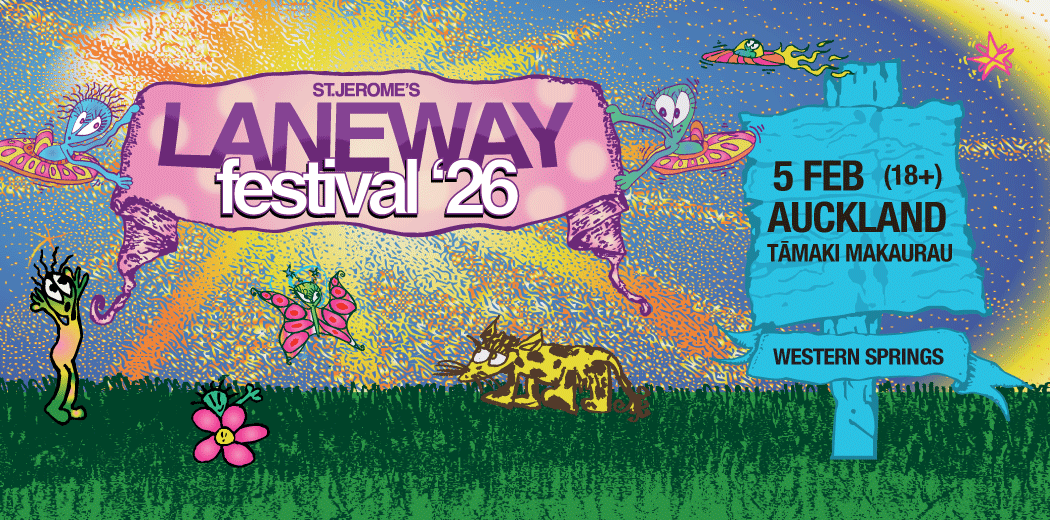
Laneway Festival's co-founders are putting Auckland at the front of the festival's 21st birthday route, with the 2026 New Zealand date set for Western Springs Stadium on Thursday 5 February. Discover Auckland's listing, updated on 21 June, says Laneway Festival NZ will again lead a refreshed six-city Trans-Tasman run.
This is today's founder-focused article for The Auckland Loop because the event listing includes direct comments from Laneway Festival co-founders Danny Rogers and Jerome Borazio. They describe the 21-year milestone as a moment to honour the festival's history while looking to the future, and say Auckland has been an important part of the story. That makes the announcement more than a date-and-venue notice. It is a founder-led reflection on how a small event became a summer ritual across Australia and New Zealand.
The Auckland setting is practical as well as symbolic. The 2026 event shifts to the day before Waitangi Day, meaning fans can begin the long weekend at Western Springs before the wider tour moves across the Tasman. That timing changes the way people may plan travel, accommodation, transport and hospitality spending around the festival. A Thursday date can still work if the public holiday turns it into the start of a long weekend rather than a midweek obstacle.
Western Springs Stadium also gives Laneway a venue with music history and outdoor scale. Discover Auckland's local tip notes that the venue is outdoors and advises people to pack layers and check the forecast. The listing says Western Springs is a 10 to 25 minute drive from the city centre and is accessible by bus and train, with many large events using special public transport arrangements included in tickets.
For Auckland businesses, the event's value reaches beyond the gate. Festivals create spending around hotels, rideshares, buses, bars, restaurants, convenience stores, retail, production suppliers, security, cleaning, staging, hospitality staff and nearby neighbourhoods. The city has seen how well-run major events can lift visitor nights and local spending, but the benefit depends on transport, crowd management and a programme strong enough to attract out-of-town fans.
The founder angle also helps explain Laneway's durability. Rogers and Borazio say the festival began as a little street party in a Melbourne laneway and has grown into a summer ritual. That origin story is relevant because many durable events start with a clear cultural niche before becoming commercial fixtures. The challenge after 21 years is to keep the tastemaker identity while operating at a scale that requires sponsors, ticketing, logistics and cross-border coordination.
Auckland fans do not yet need a review of the lineup to understand the significance. The confirmed public facts are that Laneway is returning to Western Springs, the Auckland date leads the 2026 route, the festival is marking its 21st birthday, and the co-founders are publicly framing Auckland as part of the event's growth story. That is enough to make it a local business and events story now, with ticket demand and transport planning to follow.
It is also a reminder that founder stories are not limited to startups and technology. Events are businesses too. They are built from taste, risk, logistics and trust, and they survive only if audiences keep believing the experience is worth their time and money. Laneway's Auckland return is a test of that relationship at a larger and more mature stage.