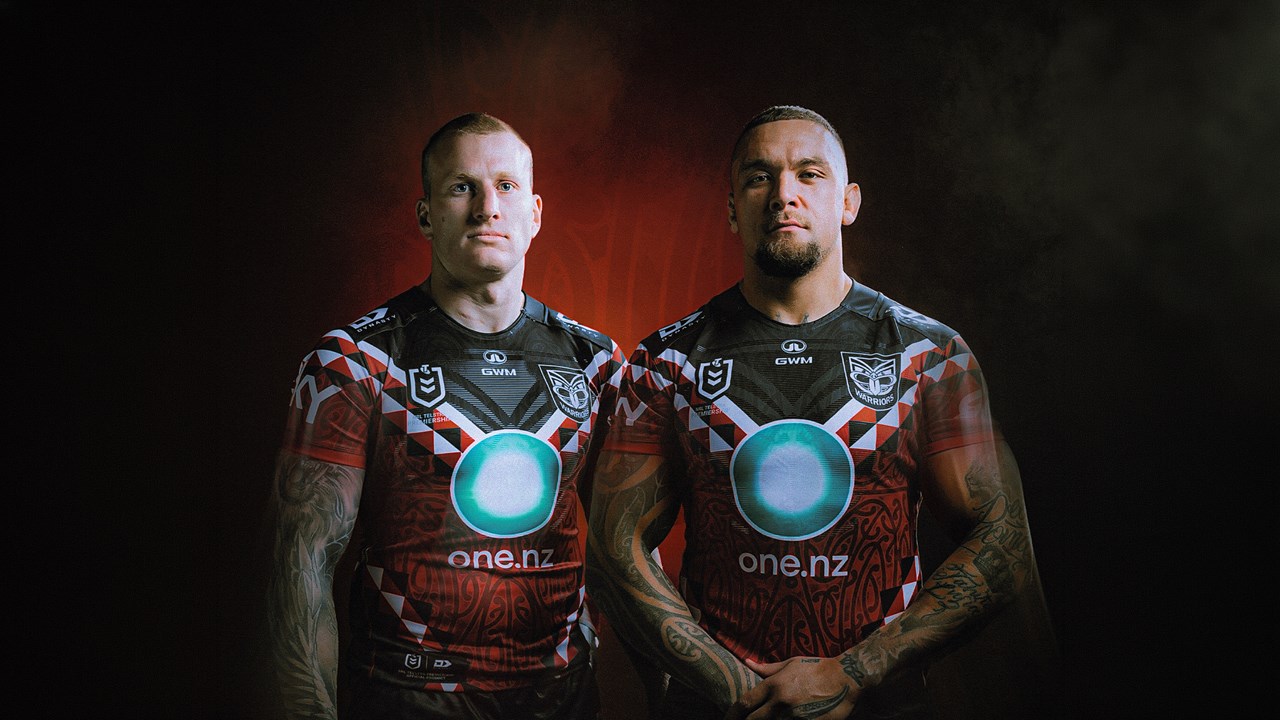
The One NZ Warriors have unveiled Te Arahi, the jersey their NRL and NRLW teams will wear for Indigenous Round, giving Auckland sport a creator-led story ahead of two August home fixtures. The club announced the strip on Wednesday morning, 29 July, and said the men's side will wear it against the Panthers at Go Media Stadium on Friday 7 August. The women's side will wear it the following night against the Knights at FMG Stadium Waikato in Hamilton.
The jersey was designed by Jayden Hokianga, who also created the club's 2025 NRL and NRLW Indigenous jerseys. That continuity matters because it makes the launch more than merchandise. It links the club's visual identity across seasons and across its men's and women's teams, while giving one designer a clear authorship role. For Auckland fans, Te Arahi is likely to be seen first as a match jersey, but the club is also framing it as a story about leadership, whakapapa, collective purpose and shared standards.
The Warriors said presale opened for members at 8am on Wednesday and public sales through the Warriors store were set for 7pm. That commercial timing gives supporters a direct way into the story before the games themselves. It also underlines how modern club jerseys work: they are sporting kit, cultural expression, retail product and fan identity all at once. When the design has a named creator and a published meaning, fans can judge more than colour and fit.
The sporting stakes are straightforward. The Warriors' NRL side is sitting near the top end of the table and the Panthers match on 7 August gives the strip a high-profile Auckland setting. Go Media Stadium will carry the visual launch on field, with broadcasters and supporters amplifying it beyond the venue. The NRLW match the following night gives the design a second stage and reinforces the club's decision to use one shared identity across both teams.
For clubs, Indigenous Round designs can fall flat if they are treated as a seasonal template. The Warriors' advantage here is specificity. Hokianga is named, the jersey has a stated theme, and the same creative thread carries from last season into this one. The useful test is whether that story remains visible after the launch post, through match-day presentation, player explanation and supporter uptake.
The broader Auckland angle is that sport is often one of the city's most public cultural stages. A jersey can reach people who may never attend an exhibition, civic ceremony or formal discussion about design. Te Arahi will be seen on players, in stands, in stores and online. If the club handles it carefully, it can be a practical example of how Auckland sport carries creative work into everyday public view. The next checkpoint is the Panthers game, where the design moves from announcement image to live match setting.
The jersey also gives Auckland retailers and community sport clubs a timely talking point before the August home stand. Supporters will debate whether they like the design, but the better conversation is what it asks players and fans to recognise: leadership as something expressed through preparation, responsibility and the people who helped each player reach the field.