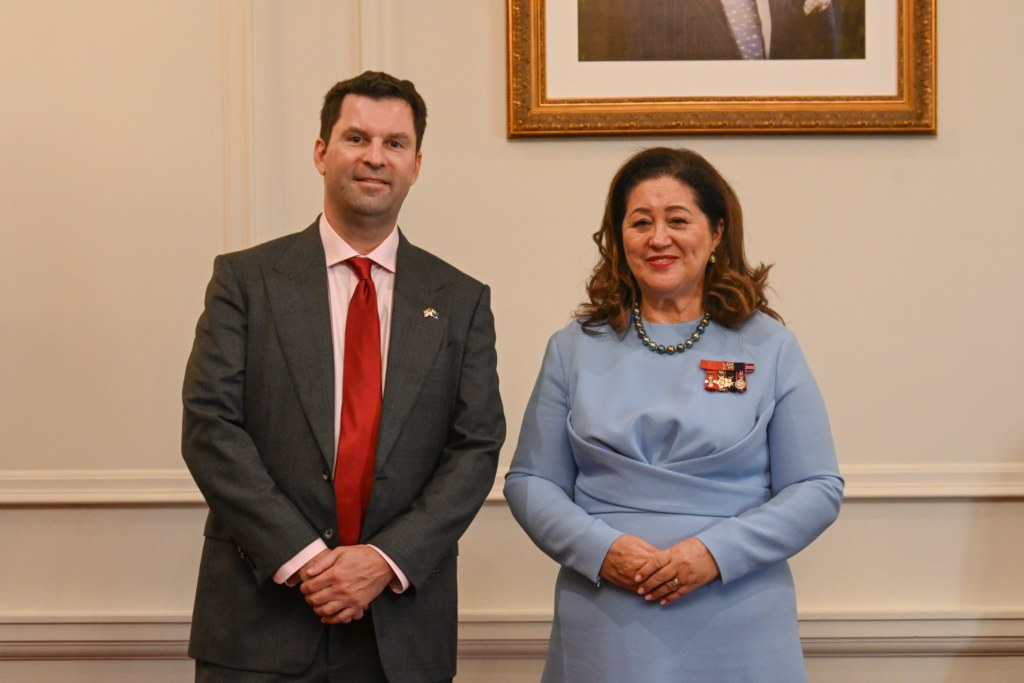
New US Ambassador Jared Novelly has put Auckland Harbour directly into the nuclear-free debate, saying he would like to see a nuclear-powered American aircraft carrier visit the City of Sails.
1News reported on Friday afternoon that Novelly raised the idea while speaking to media for the first time since taking up the role. He also said his job was to respect New Zealand's opinions rather than change domestic policy, but the aircraft-carrier comment is still politically charged because Auckland Harbour has long been an obvious symbol in any discussion about visiting warships.
The ambassador officially presented his credentials to Governor-General Dame Cindy Kiro on 1 July, according to the US Embassy. That ceremony formally began his duties as ambassador to New Zealand. Within days, his first public media comments had moved from the normal language of partnership into one of New Zealand's most sensitive foreign-policy subjects.
The issue is not whether Aucklanders enjoy seeing large ships. The harbour regularly hosts naval visits, cruise ships, superyachts, ferries and maritime events. The issue is that nuclear-powered or nuclear-armed military vessels intersect with New Zealand's nuclear-free law, defence identity and decades of public memory. A US aircraft carrier in Auckland would not be a normal port call. It would be a test of law, alliance language and public consent.
Novelly's framing appears designed to make American military power feel less distant and less threatening. He reportedly described aircraft carriers as impressive and suggested a public-facing event could help people understand them. That kind of diplomacy is familiar: show the hardware, humanise the relationship, and turn a strategic asset into a public spectacle.
But New Zealand's nuclear-free position was not built from unfamiliarity alone. It came from a political choice about the kind of defence relationship the country wanted, even at the cost of tension with the United States. Many Aucklanders who support closer US ties may still oppose nuclear-powered vessels entering local waters. Others may see a renewed conversation as useful if New Zealand is being asked to lift defence spending and take a larger role in regional security.
The Cook Islands and Pacific minerals part of Novelly's first interview also shows the wider context. The United States is trying to strengthen influence in the Pacific, diversify critical mineral supply chains and encourage partners to spend more on defence. Auckland Harbour is only one image in that larger strategic argument.
For Auckland, the practical question is whether the comment becomes policy pressure or remains rhetorical. The Government has not announced a change to the nuclear-free framework. Any real carrier visit would require more than ambassadorial enthusiasm. It would require legal compatibility, ministerial decisions and a public explanation of what exactly was being invited.
The better local response is not panic or theatre. It is clarity. If the United States wants a deeper defence conversation, New Zealanders should know what is being asked. If Auckland Harbour is being used as a symbol, Aucklanders deserve to know whether that symbol is hypothetical or the start of a serious policy push.
Novelly has arrived with energy and a willingness to speak plainly. His first Auckland-linked idea also shows how quickly old foreign-policy questions can become current again.