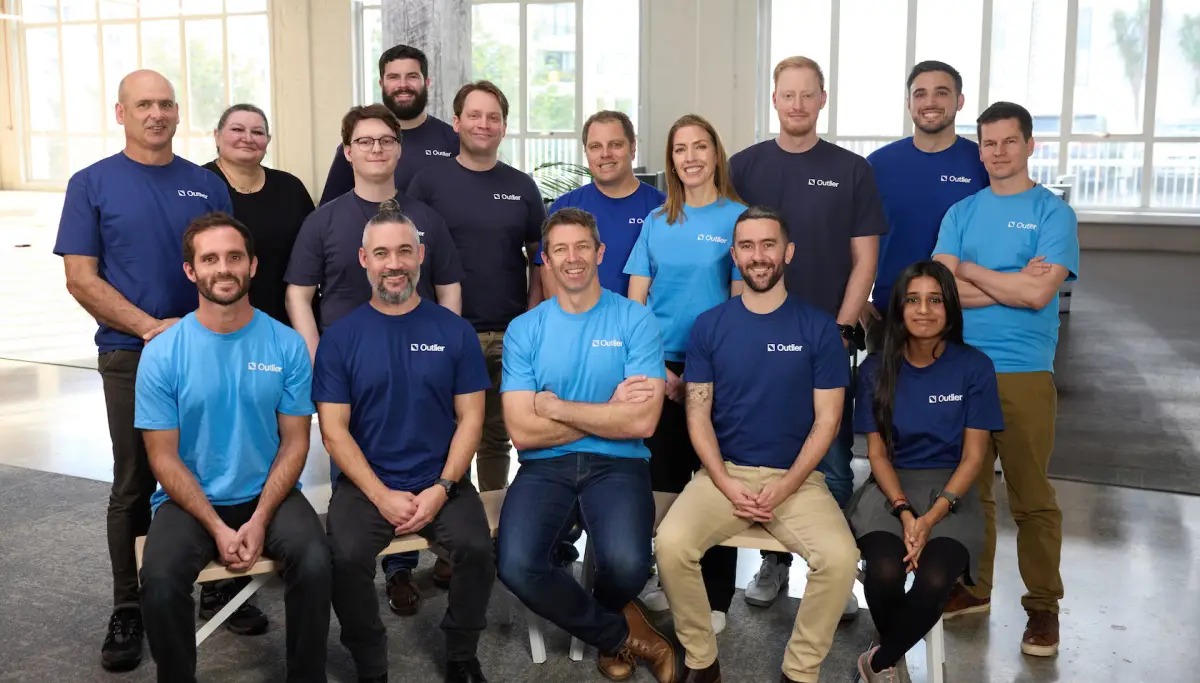
Auckland startup Outlier Space has put one of New Zealand's biggest early-stage technology raises into a very specific bet: that the next useful manufacturing environment may be orbit. The company, founded and led by former Rocket Lab engineer Jamie France, has raised US$7.35 million in pre-seed funding to develop reusable commercial microgravity payload capsules. The raise was reported on 29 July and gives Auckland a founder story that is genuinely current, technical and internationally pointed rather than another generic startup-networking update.
The company is not promising to make cancer drugs or semiconductors itself. Its role is to build the orbital return platform that customers can use to send experiments and manufacturing equipment into microgravity, then bring material back to Earth. That matters because microgravity can change how biological materials, crystals and advanced materials form. If the platform works, the company is selling access, reliability and repeatability in a market where launch capacity is improving but return logistics remain hard.
Reporting on the round said Jamie France confirmed the capital would support hiring and progress toward flight testing, with the raise led by GD1 and including support from Nova Threshold, Brian Cartmell, Airtree, Icehouse Ventures, Investible and Side Stage Ventures. Those names make the raise more than a local curiosity. It places an Auckland team inside a trans-Tasman and global investor conversation about whether space can move beyond communications, earth observation and launch into commercial manufacturing services.
The company also carries a useful Auckland angle because the city has already produced deep links to the space sector through engineering talent, Rocket Lab alumni, university capability and investors willing to back technical risk. Outlier's plan will still need engineering proof, regulatory clearance, launch partnerships, customer commitment and enough capital to survive long development cycles. A large pre-seed round reduces some pressure, but it does not remove the hard parts of space hardware. Flight testing is where the promise becomes measurable.
The commercial question is whether enough pharmaceutical, biotechnology, materials and government science customers will pay for repeatable microgravity access. Demand is expected to be strongest in larger overseas markets, especially the United States and Europe, but the company can still anchor design and engineering capability in Auckland. That is the more important local economic story. A startup does not need its end customers to sit on Queen Street for Auckland to benefit from high-value engineering work, supplier relationships and specialist hiring.
For readers, the key point is that this is not a tourism or branding story about space. It is an attempt to turn orbital conditions into a service business. If Outlier can make payload capsules reusable, predictable and commercially priced, Auckland gains a founder-led company in a sector where a small technical edge can matter globally. If it cannot, the raise still signals that investors are hunting for New Zealand companies with ambition beyond software alone. Either way, Jamie France and Outlier Space have made Auckland's startup news materially more ambitious this week.
For local founders, the useful lesson is not to copy Outlier's sector, because most startups will never need orbital hardware. It is that Auckland companies can still choose hard, technical markets if the founder has domain credibility and a credible path to early tests. That raises the bar for the city's startup conversation in a good way.