
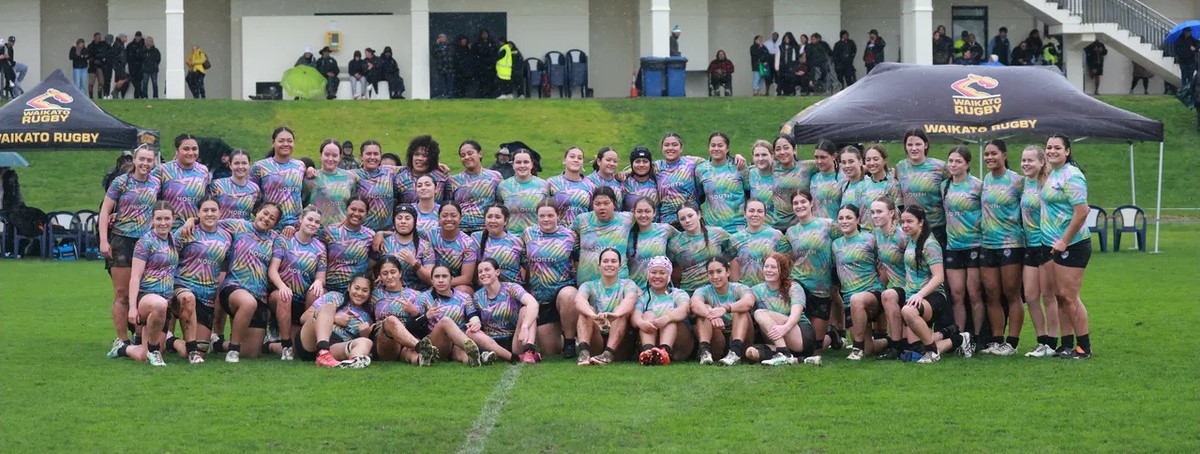
Howick College loose forward Keana Farani has been named in New Zealand Rugby's U18 Girls Pathways Squad, giving east Auckland another marker of progress in the women's rugby development system. NZ Rugby announced today that 50 players have been selected for the camp in Hamilton from 5 to 10 July, with Farani listed in the North squad as an Auckland and Howick College representative.
The selection is locally meaningful because it connects a school player to a national high-performance pathway at a time when women's rugby is becoming more professional, more visible and more competitive. The Times highlighted Farani's selection today, noting that the camp includes a North v South clash on 10 July and that it is designed to help players understand what it takes to reach the next level.
NZ Rugby Women's High Performance Pathways Manager Kendra Cocksedge said last year's inaugural camp had already helped accelerate young players toward higher honours. The Times reported her comment that six players from last year's squads had gone on to earn professional Super Rugby Aupiki contracts for 2026. That is the important context: this is not just a school holiday rugby camp. It is a scouting, development and education environment linked to the sport's professional future.
Farani is one of several Auckland players named in the North squad. NZ Rugby's list includes players from Waitakere College, One Tree Hill College, Epsom Girls' Grammar, Howick College, Mt Albert Grammar and other northern schools and clubs. That spread shows how broad the talent base has become across the city. For Howick College, Farani's selection gives the school a direct connection to the national under-18 pathway.
The camp's North-South structure also matters. It gives players a competitive match environment after several days of preparation and education. Coaches and selectors can see not only size, pace and skill, but decision-making, resilience, communication and how players respond when placed beside unfamiliar teammates. Those traits are harder to measure in ordinary school fixtures.
For Auckland rugby, the selection should be read alongside the continuing growth of the women's game at school, club and provincial levels. The pathway to professional rugby used to be less visible for girls than for boys. Now there are clearer stepping stones: school competitions, sevens tournaments, provincial programmes, national age-grade camps, Super Rugby Aupiki and, for the very best, Black Ferns ambitions.
The challenge is maintaining that pathway beyond one announcement. Young players need coaching, recovery support, travel funding, nutrition guidance, safe strength and conditioning, and competition structures that do not overload them. Families and schools also need to understand what a high-performance pathway asks of teenagers, especially when training, study and ordinary life are already demanding.
Farani's selection is therefore both a personal achievement and a signal to other Auckland school players. The national pathway is reachable, but it is also selective and increasingly serious. If the camp does what NZ Rugby says it is designed to do, players will leave Hamilton with a better sense of the standards required, the habits that matter and the opportunity now opening in women's rugby.