Celestial Corner has put local makers and Maori creative leadership at the centre of Auckland's Matariki weekend, with the Celestial Matariki Market scheduled for Saturday 18 July at the Ellen Melville Centre in the central city. OurAuckland lists the free event for 12pm to 4pm in the Woman's Pioneer Hall, while Discover Auckland describes it as a warm, whanau-friendly market curated by Celestial Corner, a Maori wahine-led creative kaupapa.
That local-operator detail is the reason this is more than a weekend listing. Auckland has plenty of winter events, but the strongest ones often come from organisers who already understand the communities, makers and small creative businesses they are bringing into a room. A market built around handmade and uniquely designed work gives residents a practical way to support creators instead of treating Matariki only as a performance calendar or a public-holiday label.
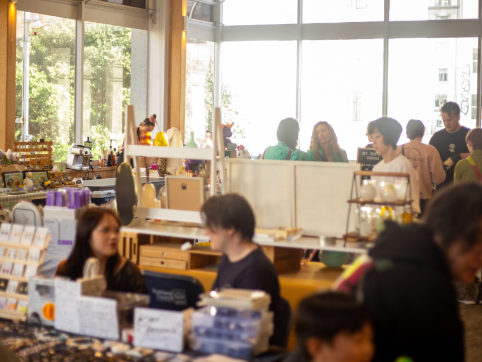
The event sources say makers from across Tamaki Makaurau are expected to offer handmade and uniquely designed works in a cosy indoor space. The listing also points to live DJ sets, chill-out zones and free creative activities inspired by bespoke Maori artwork. That mix matters because it gives the market several entry points: people can shop, talk with makers, spend time with friends, bring children during the school holidays or simply stay in the city centre without needing a large ticket budget.
For the Ellen Melville Centre, the choice of venue is also useful. The building sits in Freyberg Place, close to Queen Street, High Street, Albert Park and public transport links. A short, daytime market can bring life into the city without asking families to stay late in winter weather. It also gives nearby cafes, retailers and hospitality venues a chance to pick up foot traffic from people who may combine the market with lunch, shopping or other Matariki activities.
The Matariki framing should be handled carefully. The value here is not simply that a market has a seasonal theme. It is that Maori-led creative work is visible in a central civic space and that local makers can meet customers directly. For small creative operators, those face-to-face settings are important. They help test demand, explain materials and stories behind products, and build the repeat relationships that online marketplaces do not always create.
Auckland's event economy is often judged by major concerts, stadium crowds and big festivals. The Celestial Matariki Market shows the other side: small and mid-sized events that make the city feel lived in, especially during school holidays and winter weekends. The immediate reader takeaway is simple. The market is free, central and current on Saturday afternoon. The wider point is that Auckland's creative economy needs these organiser-led spaces if local makers are to remain visible in the city they help define.
It is also a reminder that local creative work needs practical infrastructure. A room, a listing, a council contact, a reliable time window and a central location can make the difference between a maker being visible and a maker being hidden online. For a city trying to keep its centre active, those details are not small. They are part of the everyday machinery that lets culture and small enterprise meet residents directly.