
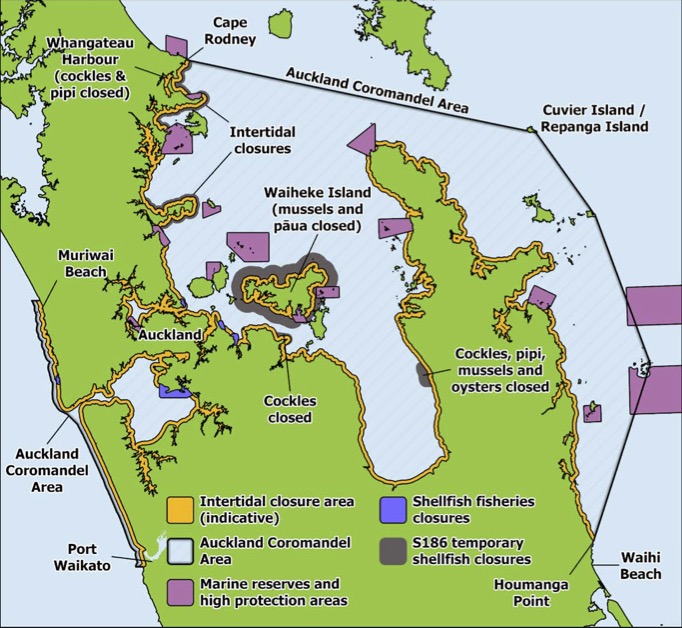
Auckland and Coromandel shellfish harvesting rules are back in local focus after the Times reported on options being considered to reduce pressure on shore-based shellfish gathering. The story draws on a report to the Howick Local Board and Fisheries New Zealand's wider review of recreational shellfish harvesting in the Auckland-Coromandel area.
The review is important because it reaches directly into everyday coastal life. Shellfish gathering is food, recreation, family tradition and cultural practice for many people. It is also a pressure point for beaches and rocky shore environments that are easy to access from Auckland's growing population. When too many people harvest from the same coastline, shellfish beds can decline faster than they recover.
Fisheries New Zealand's consultation page says the review responds to ongoing concerns about the sustainability of intertidal shellfish and other fisheries resources in the Auckland-Coromandel area, and aligns with actions in the Hauraki Gulf Fisheries Plan. The consultation itself closed earlier this month, but the policy choice remains current as councils, local boards, mana whenua, fishers and environmental groups respond to the options.
The four options range from a full intertidal closure to partial closure with exceptions, and two versions that add a combined recreational daily limit of 10 shellfish for species without their own limit outside the closure zone. The proposed closure area would run from the mean high-tide mark to 200 metres offshore along mainland and Waiheke Island coastlines. That matters for Auckland because Waiheke and the Hauraki Gulf are not abstract policy places. They are heavily visited coastal environments with real harvest pressure.
The Times reported that concerns have built over the effect of recreational harvesting in Auckland, with easy beach access and land-based pollution contributing to declining shellfish numbers. It also noted that limits have gradually tightened since the 1990s, including lower daily limits for popular species and closures in some areas such as Eastern Beach. In other words, the present review is not the first intervention. It is part of a long-running attempt to manage use before local depletion becomes irreversible.
The trade-off is difficult. A full closure is clear and easier to understand, but it can feel blunt to people who harvest responsibly or depend on shellfish as part of family food practices. A partial closure with exceptions may be more flexible, but it can be harder to explain, enforce and monitor. The combined daily limit option adds another layer: it may reduce take outside the closure zone, but only if people know the rules and fishery officers can realistically enforce them.
Environmental Defence Society has backed stronger controls, arguing that pressure on inshore shellfish species has been unsustainable and that many harvested species are not well monitored. Recreational fishing voices may push back if they see the proposals as too broad or poorly targeted. Auckland Council staff, according to the Times report, have recommended a targeted option that combines a partial intertidal closure with tighter daily limits outside the closure area.
The best outcome will be one Aucklanders can understand at the beach. Signs, maps, multilingual communication, mana whenua involvement and practical enforcement will matter as much as the final legal wording. If the goal is healthy shellfish beds for future use, the rules have to be clear enough that ordinary people can follow them before they put a bucket in the sand.