Auckland's startup community has been given a timely reminder that entrepreneurship is not only about pitch decks and capital raises. It is also about who gets to see themselves as a founder, who gets access to practical advice, and how early-stage operators learn from people already building companies, products and careers.
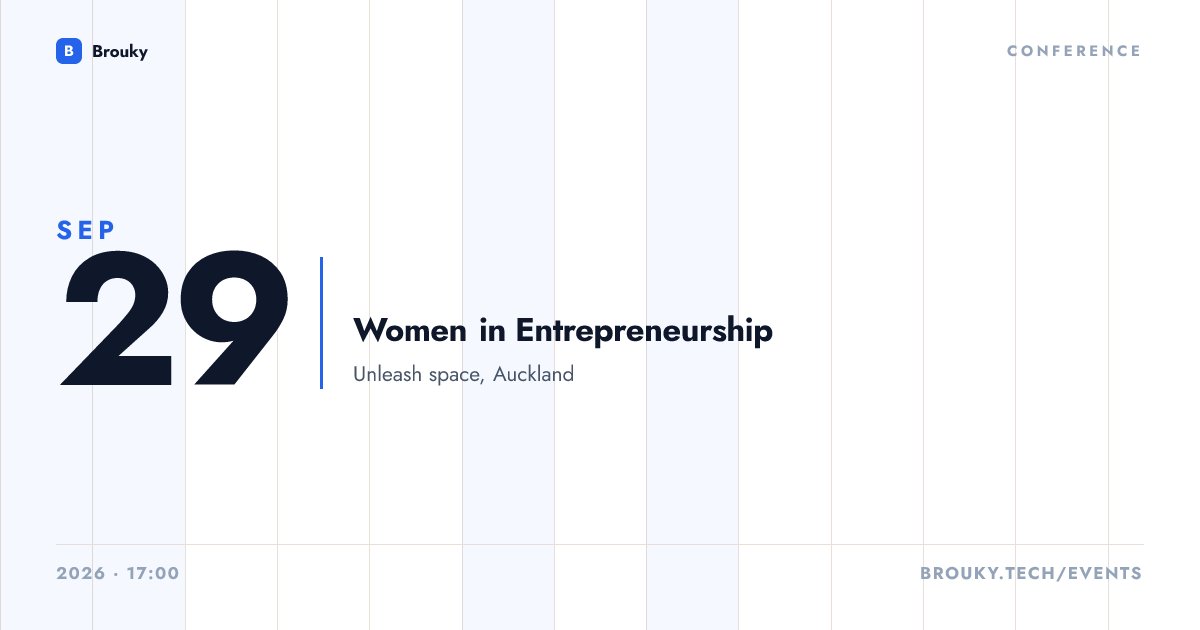
The University of Auckland's Velocity programme hosted a Women in Entrepreneurship event at Unleash Space on Tuesday evening, bringing together speakers across investment, finance strategy, artificial intelligence, fashion, branding and medtech. The event was free and aimed at students, staff and emerging entrepreneurs looking for real founder lessons rather than polished slogans.
The speaker list gave the session its useful range. It included Isay Acenas from Outset Ventures, Georgia Burns from Auror, Helen Zipei Liu of Ynova.ai, Anna Paterson of Everlasting and Kate Ricketts of ISpyNits. That mix matters because Auckland's innovation economy is broader than one sector. A founder may be building a software tool, a medical idea, a consumer brand or a creative venture, but many of the early questions are shared: who is the customer, what problem is real, how does the team survive uncertainty, and when does a rough idea become something worth backing.
Velocity's role in the city is also worth noting. The programme sits inside the University of Auckland's Centre for Innovation and Entrepreneurship and runs events, challenges and workshops through the year. For students, that gives entrepreneurship a lower-friction entry point. People can test an idea, listen to operators, find peers and learn the language of startups before they are expected to behave like seasoned founders.
The women-founder focus is not a side issue. Startup ecosystems often talk about talent and ambition as if access is already evenly distributed. Events like this make the pipeline more visible. They show who is building, who is advising, who is investing and what different leadership paths can look like. That can be especially important for people who are curious about entrepreneurship but do not have family networks, investor contacts or a clear model to follow.
For Auckland, the practical outcome is a stronger local founder base. A good event will not create a company overnight, but it can change the questions someone asks the next morning. It can make a student take their prototype more seriously, push a designer to test demand, or help a technical founder understand why storytelling and distribution matter as much as product.
There is also a city-centre thread here. Unleash Space gives the programme a physical home in the central university precinct, close to students, researchers, advisers and early-stage teams. That density is useful. Auckland does not need every founder to leave for larger markets before they find support. It needs more places where talent can bump into advice, investors can see emerging ideas early, and new operators can learn without pretending they already know everything.
The event's broader message is simple: founder development is community work. It depends on people with experience being willing to tell the truth about the highs, lows and trade-offs of building something new. If Auckland wants more resilient local companies, more women-led ventures and more practical innovation, these rooms matter.