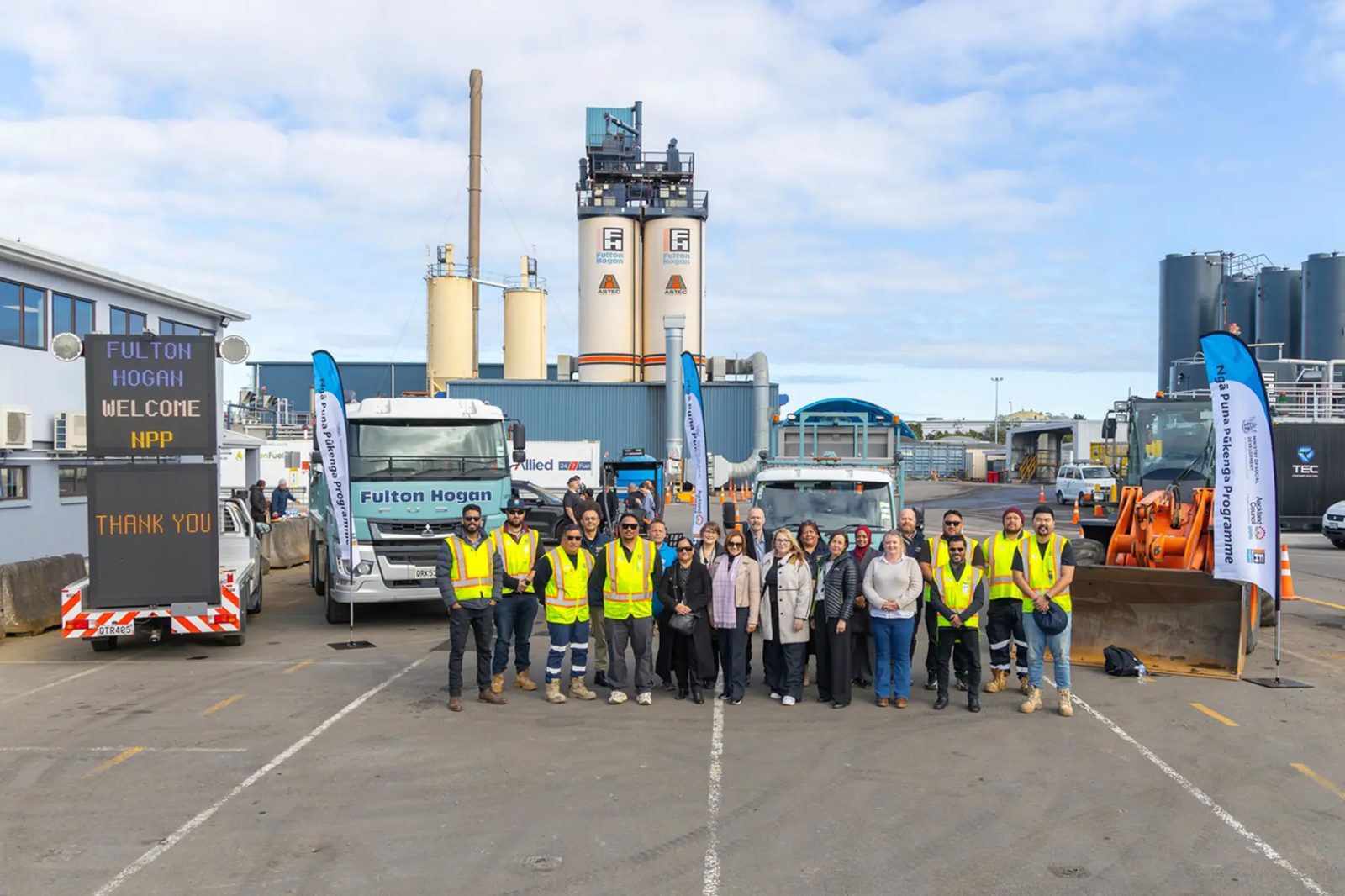
Auckland's infrastructure workforce pipeline has reached a milestone, with Ngā Puna Pūkenga now credited with helping 1,715 Aucklanders into permanent, full-time work since the programme began in 2019. Auckland Council says the 2025/26 financial year was the initiative's strongest yet, with 452 people moving into jobs across civil construction, roading, arboriculture, public transport and related industries.
The programme began as a small pilot with 42 placements. It is now presented as a partnership between Auckland Council and the Ministry of Social Development, built to connect people facing barriers to employment with employers that need workers for practical, city-building roles. That matters because Auckland's infrastructure pressure is not abstract. Roads, pipes, flood resilience work, buses, trees and construction projects all depend on people who can train, turn up and stay in the industry.
The strongest number in the council update may be the retention signal. Council says around 80 per cent of participants have remained off a benefit for more than two years. For a workforce programme, that shifts the story from short-term placement to longer-term stability. A job that lasts can change rent certainty, family budgeting, transport choices and confidence. It can also help employers reduce the churn that makes essential work harder to plan.
The model is deliberately practical. Employers provide permanent full-time roles, while participants receive help with recruitment, training, mentoring and career development. The programme also places weight on Living Wage employment, which matters in a city where getting a job is only part of the equation. A role has to be stable enough to improve a household's position, not simply move someone from one precarious arrangement to another.
The examples in the council update show why the pathway approach matters. One participant gained a Class 2 licence and passenger endorsement before becoming an urban bus driver. Another entered with no licence, qualifications or traffic-management experience and progressed into supervisory responsibilities. Those are not glamorous case studies, but they are exactly the kind of step-by-step gains that build a durable local workforce.
For Auckland, the employer side is just as important. Council says 28 employers participated this year, including 15 joining for the first time, while 171 employers have been involved since 2019. That breadth helps the programme function as more than a recruitment exercise for one contractor. It becomes a shared pipeline for sectors that repeatedly struggle to find and keep trained people.
The milestone also lands at a time when the city is asking more of its infrastructure. Flood resilience, transport upgrades, construction delivery and maintenance all require skilled hands as much as policy announcements. Ngā Puna Pūkenga's achievement is therefore both social and operational: more Aucklanders are gaining stable careers, and more of the city's essential work has people ready to do it.
The next test is scale without losing support. A pathway that works for 42 people can be personal; a pathway that serves hundreds each year must keep the mentoring, employer commitment and training quality that made it useful in the first place. If Auckland can hold that together, the programme's 1,715 placements will look less like a finish line and more like proof that local procurement and employment policy can change lives in practical ways.