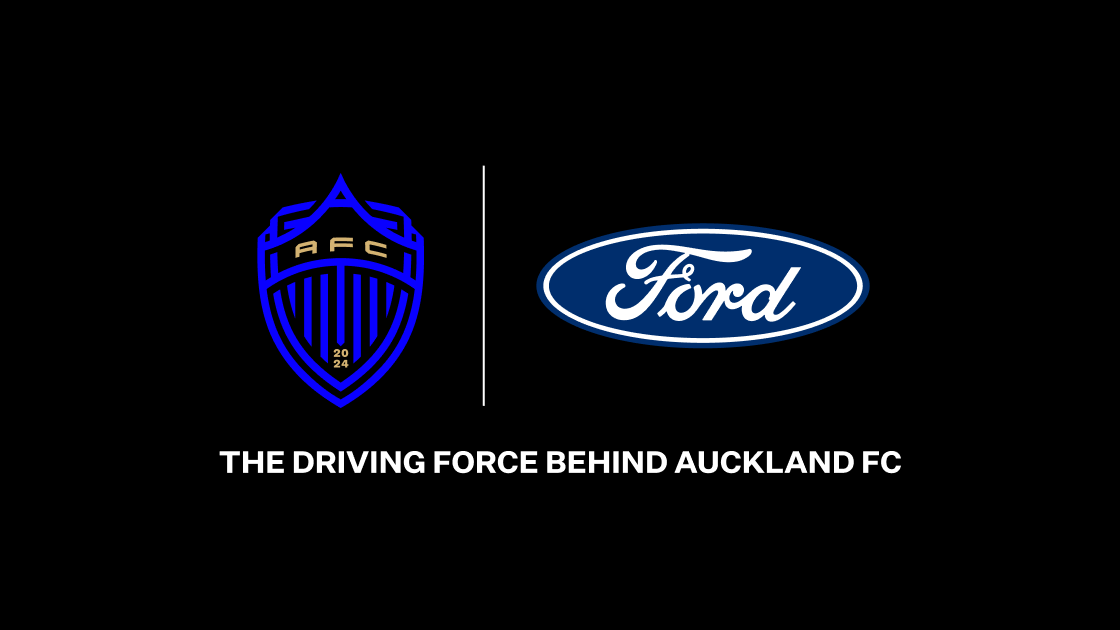
Auckland FC has added Ford New Zealand to its commercial line-up, announcing the car company as the club's Official Vehicle Partner on Tuesday, 21 July. The club says Ford will provide a fleet of vehicles to support day-to-day operations, giving the partnership a practical base as well as a branding role. For a young professional club still building its Auckland identity, that kind of operational sponsorship is more than a logo arrangement.
The deal lands at a useful moment for Auckland FC. The club has moved quickly from launch excitement into the harder phase of sustaining a professional football operation: travel, training, community work, player movement, sponsor servicing and match-day logistics. A vehicle partner is not the flashiest category in sport, but it touches the daily machinery behind a team. If the fleet helps staff and players move around the region more efficiently, supporters may never see the benefit directly, but the club will feel it.
Ford New Zealand also gets a clear Auckland sports platform. Professional football in the city is no longer an abstract opportunity; Auckland FC has become a visible part of the local calendar. For sponsors, that means match-day crowds, digital content, community appearances and a supporter base that is still forming habits. Joining early gives Ford a chance to be associated with the club's growth rather than arriving after the story is already settled.
The announcement also shows how Auckland FC is positioning itself in the local business market. The club is not simply selling shirt space or hospitality boxes. It is building a network of commercial partners around practical categories that can support operations and fan engagement. In a crowded sponsorship environment, where rugby, league, cricket, concerts and festivals all compete for attention, football has to give partners a reason to believe the audience is distinct and growing.
For fans, the immediate result will probably be subtle. A vehicle partnership does not change the starting eleven, the fixture list or the transfer window. But commercial deals can shape the resources available to a club over time. Better-backed organisations can invest more confidently in staff, community programmes, match-day content and the small details that make a professional team feel settled. That is especially important for a club still defining its long-term place in Auckland sport.
The partnership also has a regional logic. Auckland is a spread-out city, and professional sport here rarely happens in one compact precinct. Players, coaches, staff, schools, sponsors and community groups are distributed across suburbs and across the wider region. Transport is part of the work. A vehicle fleet connected to the club's daily operation is therefore easier to understand in Auckland than it might be in a smaller, denser sports market.
The source announcement frames the deal in positive sponsorship language, as expected, but the news value is in the structure. Ford becomes the Official Vehicle Partner, provides vehicles, and joins Auckland FC at a stage when the club is trying to turn early momentum into repeat support. Those confirmed facts are enough to make the story relevant without inflating the partnership into a competitive guarantee.
The bigger test will come through visibility and follow-through. If Ford's involvement supports community appearances, club operations and fan-facing activations, the partnership can become part of Auckland FC's broader local footprint. If it remains mostly behind the scenes, it still fills a practical role. Either way, the announcement is another sign that Auckland FC is continuing to build the commercial base needed for a professional club to survive beyond its launch season.