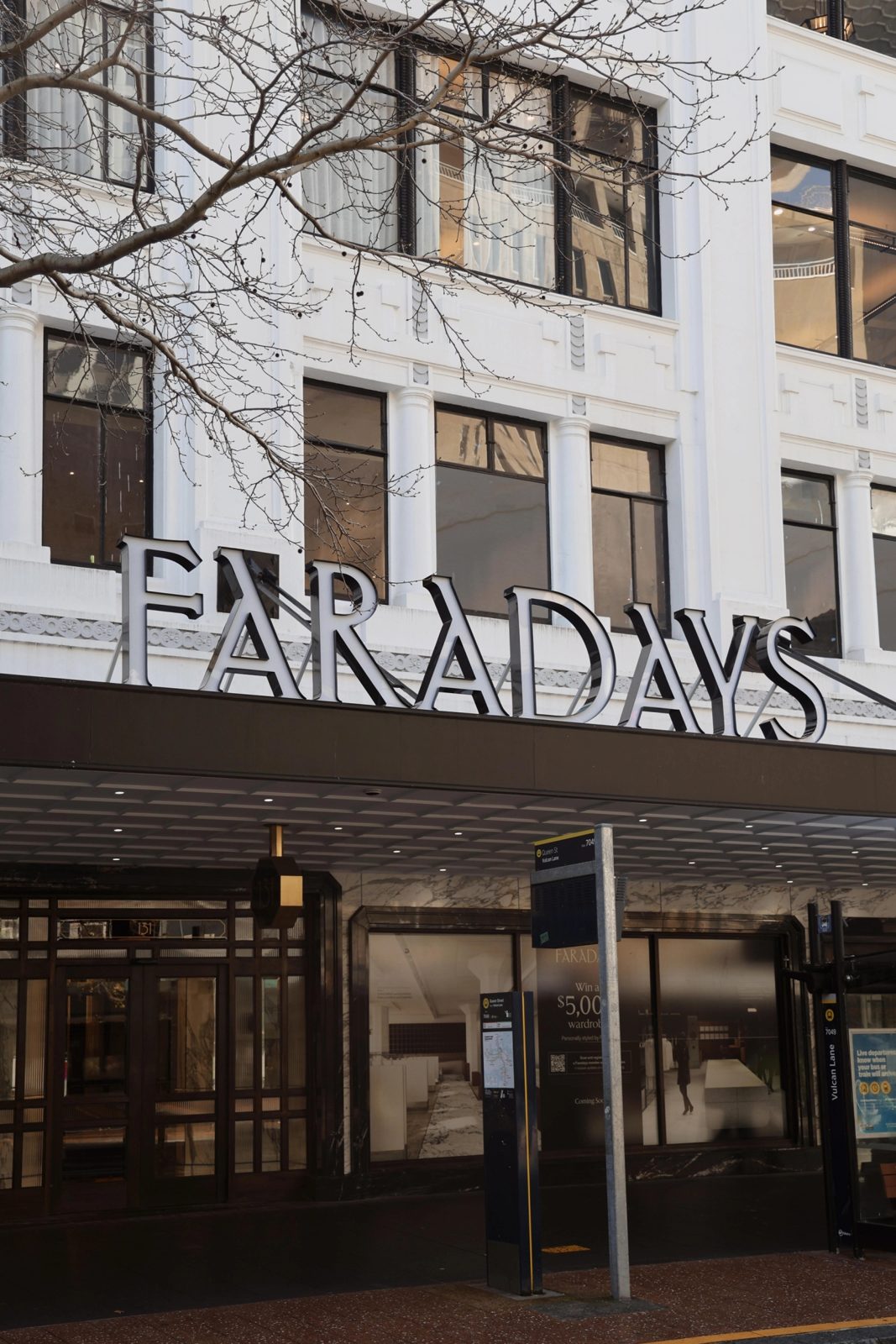
Faradays has opened its new Queen Street department store, giving Auckland's city centre a visible test of whether premium retail can still draw people into a large, destination-style shopfront. The store opened at 1pm on Saturday, 26 September, at 131 Queen Street, bringing more than 220 fashion, beauty, fragrance, wellness, jewellery, design, home, children's and lifestyle brands into the restored former Milne & Choyce building.
The address is part of the story. Faradays is not simply taking space in a new mall or suburban precinct. It is returning department-store retail to a central Auckland building associated with one of the city's earlier retail institutions. That gives the opening a useful civic edge: it is a commercial launch, but it also asks whether lower Queen Street can keep shifting from recovery mode into a more confident mix of hospitality, transport, culture and shopping.
The project has been framed as a $30 million investment and covers almost 3,000 square metres over three levels. Inside Retail reported that Heart of the City Auckland has described it as one of New Zealand's most significant new retail developments in recent years. Faradays' own material points to a curated mix of international names, New Zealand labels and brands available to shop physically in this country for the first time.
For co-founders Edward and Constance von Dadelszen, the opening is also a founder-operator story. Their public comments focus less on simple product count and more on rebuilding the idea of the department store as a social destination. That matters because city-centre retail has been forced to argue for more than transactions. Online shopping can handle a basket. A store like this has to offer discovery, service, architecture, hospitality and a reason to spend time in the city.
The hospitality layer will matter. Faradays says Lottie's, a 70-seat all-day restaurant from Josh and Helen Emett, sits on Level One and is part of the broader attempt to make the site somewhere people can linger. The restaurant link is practical: department stores have historically used dining rooms, cafes and services to extend visits and create habits. In a modern Auckland context, that could help the store pull lunchtime workers, weekend shoppers and visitors who may otherwise treat Queen Street as a pass-through.
There is risk as well as promise. A premium department store depends on enough customers being willing to travel into the central city, browse in person and support higher-end retail through repeat visits. It also depends on the surrounding city functioning well: transport, parking, safety, street life and nearby hospitality all shape whether a destination feels easy or tiring.
For Auckland, that is why Faradays is more than a new shop. It is a founder-led bet on the city centre at a moment when many people are still deciding what Queen Street is becoming. If the store succeeds, it will not prove that old department-store retail has simply returned. It will show that a carefully curated, experience-led version can still give people a reason to come into town.