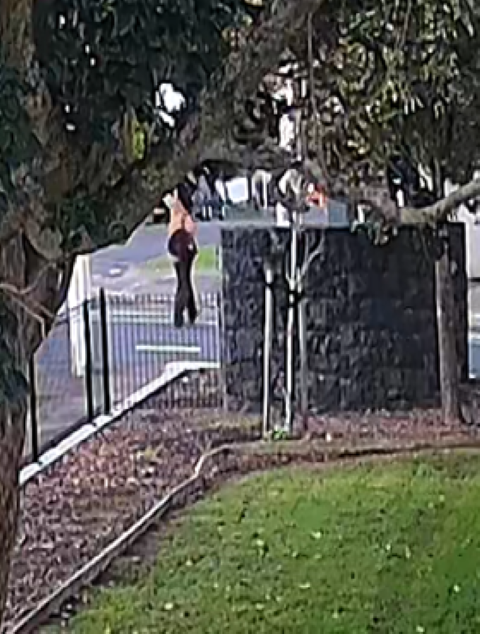
Auckland City Police have renewed a public appeal for information after a fatal house fire in Onehunga, asking for help to identify a person they believe can assist the investigation. The appeal was issued on Tuesday, 21 July, and relates to a fire at a Trafalgar Street property in Onehunga earlier this year. Police said emergency services were called to the address at about 7.20am on 22 May, where Geoffrey Rollinson was found dead.
The careful wording of the appeal matters. Police have not said the person pictured caused the fire or committed an offence. The public request is narrower: investigators want to identify a person who may be able to assist. For readers, that means any information should be passed to Police through the official channels rather than shared speculatively online. In cases involving a death, accuracy is not optional; it is central to protecting both the inquiry and the people affected by it.
Onehunga residents will understand why the appeal has local urgency. Trafalgar Street sits in a suburb with a busy mix of homes, schools, local services and transport connections. A fatal fire in that setting leaves questions for neighbours as well as for investigators. Police public appeals often depend on small pieces of information: a sighting, a memory of movement near a property, or a detail that seemed ordinary at the time but can help reconstruct a timeline.
The story is also a reminder of how long serious investigations can take. The fire happened in late May, while the latest appeal was released two months later. That gap does not make the inquiry less current. It suggests detectives are still working through evidence and have reached a point where public help could move the case forward. A person who saw something on the morning of 22 May, or who recognises the person in the Police image, may not realise their information is useful.
For Auckland readers, the practical action is clear. Anyone with relevant information should contact Police and refer to the case details in the public appeal. People who prefer not to speak directly with Police can use Crimestoppers. The important thing is that information reaches investigators, not social-media speculation or local rumour threads. Public appeals work best when communities treat them as evidence-gathering tools, not as invitations to guess.
The human centre of the story is Geoffrey Rollinson, who died at the Trafalgar Street property. Police have released limited details, and that restraint should be respected. Until investigators provide more information, the safest coverage is to report the confirmed appeal, the location, the date of the fire, and the request for identification assistance. Anything beyond that would risk turning an active inquiry into conjecture.
Auckland has seen enough major emergency responses to know that first reports are often incomplete. Fire scenes, medical findings, witness accounts and forensic work can all take time to assess. The fact that Police are still asking for help in July shows that the investigation has not closed around an easy explanation. It also gives people who lived, worked or travelled near Trafalgar Street that morning another reason to check their memory, camera footage or messages.
The public value of publishing the appeal is straightforward: someone may recognise the image or recall a detail from 22 May. That does not mean the wider community should identify people in public or make claims about responsibility. It means the official appeal should be seen by more Aucklanders, especially those connected to Onehunga, so the information can be handled by investigators. In a fatal-fire case, that is the line between helpful local journalism and harmful noise.