
University of Auckland physics research is helping move one of the world's most precise measuring tools closer to chip scale.
The work focuses on optical frequency combs, which create evenly spaced colours of light that can be used to measure time, distance and chemical signals with extraordinary accuracy. They are sometimes described as light rulers. The problem is that traditional systems have been large, expensive and largely confined to laboratories.
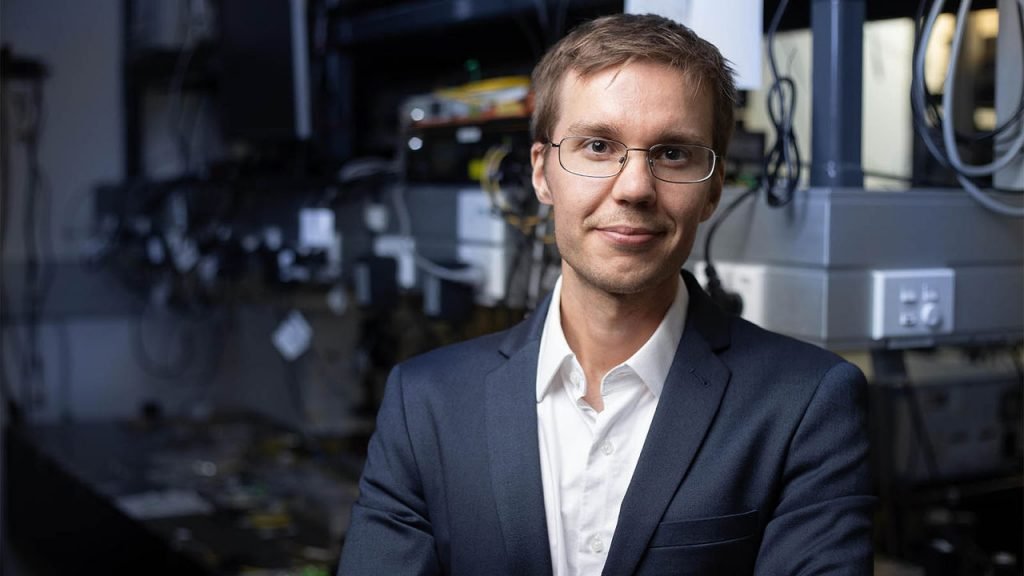
The Auckland research is significant because it points toward smaller systems that could do the same measuring work in more practical settings. The University says Professor Miro Erkintalo and his team have been developing a new way to generate frequency combs on chip-scale platforms, building from theoretical work that began in 2021.
The next step described by the research is a comb generated by two lasers an octave apart. In music, an octave is a doubling of frequency. In this context, the spacing helps the system perform core frequency-comb tasks in a compact setup.
The public-facing applications are wide. Frequency combs already underpin some of the most precise clocks in the world and can support quantum technology, telecommunications, spectroscopy and sensing. If these tools can be made smaller, cheaper and easier to integrate, they move from specialist laboratories toward devices that can be built into practical instruments.
That does not mean a commercial product is around the corner. Physics breakthroughs still need engineering, manufacturing pathways and market demand. But Auckland's role matters because deep technology often begins with research that looks abstract until the enabling platform becomes useful outside the lab.
For the city's innovation economy, this is a reminder that not every startup-relevant story starts with an app or a pitch event. Some of the most valuable future companies may begin with physics, photonics and patient work on the hardware that lets other systems measure the world more accurately.